
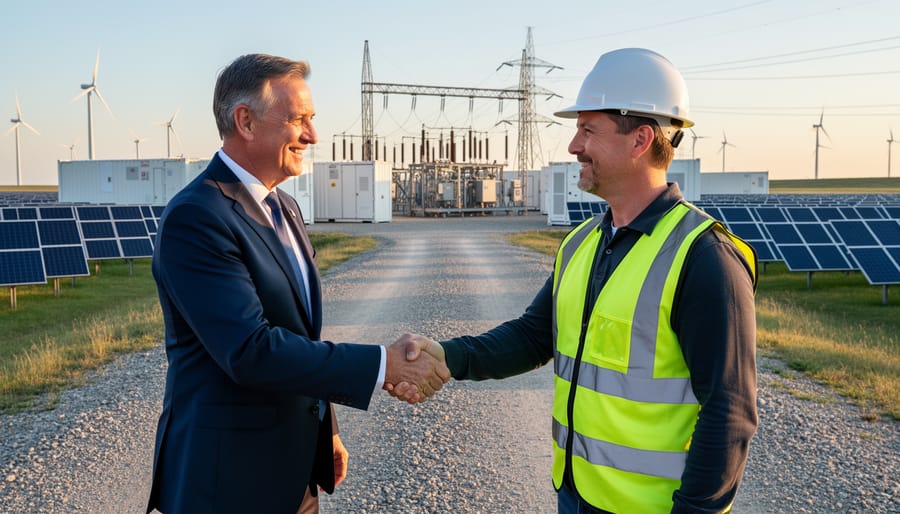
Government clean energy investment funds represent a transformative opportunity for renewable energy professionals to secure capital, accelerate project deployment, and strengthen market positioning. These specialized financing mechanisms channel billions of dollars into solar, wind, energy storage, and grid modernization projects while creating unprecedented access points throughout the renewable energy supply chain.
Understanding fund structures proves essential for accessing capital effectively. Federal programs like the Department of Energy’s Loan Programs Office provide low-interest financing for innovative clean energy projects exceeding $100 million, while state-level green banks offer smaller-scale funding for distributed generation and efficiency upgrades. Public-private partnerships combine government capital with institutional investor resources, reducing risk profiles and extending project timelines that commercial lenders typically avoid.
Strategic positioning within these funding ecosystems requires technical documentation aligned with ISO 9001:2015 standards and comprehensive sustainability impact assessments. Successful applicants demonstrate clear pathways to emissions reduction, job creation, and grid reliability enhancement. Project developers must quantify environmental benefits using standardized metrics while presenting viable financial models that satisfy both public accountability requirements and private sector return expectations.
The current investment landscape exceeds $370 billion in committed clean energy funding across North America, with allocations prioritizing domestic manufacturing, workforce development, and environmental justice communities. Procurement managers and sustainability officers who master application processes, compliance frameworks, and reporting requirements position their organizations to capture significant competitive advantages. These funds not only reduce project costs by 15-40 percent through favorable terms but also validate technology credibility and enhance corporate sustainability credentials that increasingly influence stakeholder decisions and market valuations.
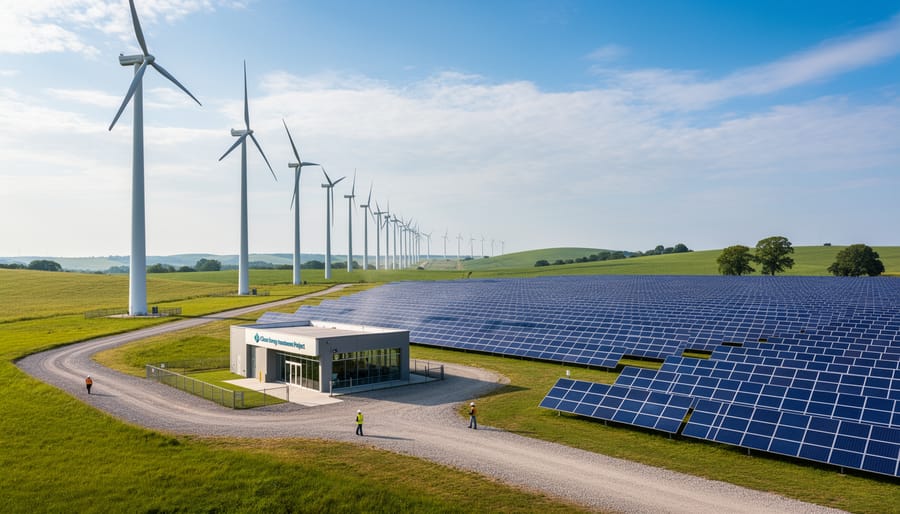
Government-backed clean energy funds operate through several distinct structures, each designed to address specific market barriers and accelerate renewable energy deployment. Understanding these mechanisms enables professionals to identify optimal funding pathways for projects and organizations.
Direct investment funds represent the most straightforward approach, where government entities allocate capital directly into clean energy projects, companies, or infrastructure. These funds typically target early-stage technologies, large-scale deployment projects, or strategic market segments requiring public sector catalyzation. The structure allows governments to maintain equity positions while sharing both risks and returns with the renewable energy sector.
Loan guarantee programs mitigate financial risk by pledging government backing for private sector loans to clean energy ventures. This structure reduces borrowing costs and improves access to capital for projects that might otherwise struggle to secure conventional financing. The approach proves particularly effective for innovative technologies lacking extensive operational track records, enabling banks to extend credit with reduced exposure.
Green banks function as specialized financial institutions leveraging public capital to mobilize private investment at scale. Operating with ISO 9001:2015 quality management principles, these entities use revolving funds, co-investment models, and credit enhancement tools to multiply initial government contributions. Their sustainability focus drives market transformation by standardizing financing approaches and reducing transaction costs across renewable energy projects.
Public-private partnerships combine government resources with private sector expertise and capital. These collaborative structures distribute risks appropriately while aligning incentives between stakeholders. Partnerships often facilitate large infrastructure projects requiring substantial upfront investment, technical proficiency, and long-term operational commitments. The model enables governments to stretch limited budgets while maintaining oversight of strategic clean energy objectives and environmental impact outcomes.
Clean energy investment funds deploy capital through multiple strategic mechanisms designed to address different project needs and risk profiles. Understanding these instruments enables renewable energy professionals to identify optimal funding pathways for their initiatives.
Grant programs provide direct, non-repayable capital for early-stage research, demonstration projects, and infrastructure development. These instruments reduce initial financial barriers and encourage innovation in emerging technologies like advanced energy storage and grid modernization. Grant recipients typically must demonstrate measurable sustainability outcomes and alignment with national decarbonization goals.
Low-interest loans and loan guarantees constitute another primary funding mechanism. These instruments lower the cost of capital for renewable energy projects, making large-scale installations financially viable. Government-backed loan programs often feature extended repayment periods and favorable terms that commercial lenders cannot match, particularly for projects serving underserved communities or deploying nascent technologies.
Tax credits represent indirect capital deployment that stimulates private investment. Investment tax credits and production tax credits have proven instrumental in scaling solar and wind installations across North America. These mechanisms reduce project costs while maintaining quality standards consistent with ISO 9001:2015 certification requirements.
Equity investments allow funds to take ownership stakes in promising clean energy ventures, sharing both risks and returns. This approach supports companies developing innovative solutions while ensuring projects meet rigorous environmental and operational benchmarks.
Many funds combine multiple instruments within single projects, creating customized financing packages that optimize capital efficiency. Procurement managers and sustainability officers should evaluate which mechanisms align with their project timelines, technology maturity levels, and organizational capacity to leverage these diverse funding opportunities effectively.

The Inflation Reduction Act of 2022 represents a transformative commitment to clean energy financing in the United States. This landmark legislation appropriates approximately $11.7 billion for Department of Energy programs, creating unprecedented opportunities for renewable energy professionals and project developers. The Act extends and expands production tax credits and investment tax credits for solar, wind, energy storage, and emerging technologies, fundamentally reshaping the financial landscape for clean energy projects.
The Department of Energy’s Loan Programs Office administers critical financing mechanisms that complement these tax incentives. The Title XVII Innovative Clean Energy Loan Guarantee Program supports large-scale projects utilizing innovative technologies, while the Advanced Technology Vehicles Manufacturing Loan Program accelerates electric vehicle and component manufacturing. These programs provide access to capital at favorable terms, reducing project risk and attracting private sector co-investment.
For procurement managers and sustainability officers, these federal initiatives create tangible opportunities to advance organizational clean energy goals while benefiting from substantial financial support. The combination of direct tax credits, loan guarantees, and grant programs reduces the cost of capital for renewable installations, energy efficiency upgrades, and grid modernization projects.
Investment tax credits now cover 30 percent of project costs for qualifying installations, with additional bonuses for domestic content requirements and projects located in energy communities. This structured approach ensures quality standards while promoting economic development in traditionally fossil-fuel-dependent regions.
Federal programs also prioritize technical rigor and certification standards. Organizations maintaining ISO 9001:2015 certification demonstrate the quality management systems increasingly valued in federal funding applications, positioning themselves competitively for program participation and successful project execution.
Canada has established a comprehensive clean energy funding ecosystem that combines federal infrastructure financing with innovation-driven support programs. The Canada Infrastructure Bank stands as a cornerstone institution, committing $10 billion in Clean Power financing to accelerate renewable energy projects across provinces and territories. This mandate focuses on grid modernization, energy storage systems, and transmission infrastructure that enables renewable integration at scale.
The Strategic Innovation Fund complements this infrastructure approach by providing repayable contributions to clean technology innovators and manufacturers. This program specifically targets breakthrough technologies in solar, wind, and energy storage that advance Canada’s net-zero commitments while strengthening domestic supply chains.
Provincial programs further enhance accessibility for renewable energy professionals and project developers. British Columbia’s CleanBC initiative, Quebec’s Transition énergétique Québec, and Alberta’s Technology Innovation and Emissions Reduction fund create region-specific opportunities aligned with local resource advantages and grid requirements.
For procurement managers and sustainability officers navigating this landscape, understanding the complementary nature of federal infrastructure financing and provincial innovation support proves essential. These programs demonstrate ISO 9001:2015 certified processes in many cases, ensuring quality assurance throughout project lifecycles while maintaining rigorous sustainability standards that benefit both developers and end-users.
State and provincial governments across North America have established complementary investment programs that address region-specific energy transition goals while amplifying federal initiatives. California’s Clean Energy Fund operates with over $550 million in committed capital, supporting distributed generation projects and grid modernization efforts that align with the state’s ambitious carbon neutrality targets. New York’s $1 billion Green Bank provides innovative financing structures, including credit enhancements and loan loss reserves, to accelerate renewable energy deployment and energy efficiency improvements. At the provincial level, Alberta’s Emissions Reduction Alberta has allocated significant resources toward carbon capture, hydrogen production, and renewable energy integration projects that leverage the region’s existing energy infrastructure. These programs demonstrate how localized funding mechanisms can effectively complement federal investments by addressing unique regional challenges, from offshore wind development in Atlantic provinces to solar deployment in southwestern states, creating diversified opportunities for renewable energy professionals and project developers throughout the continent.
Clean energy investment funds are fundamentally transforming the economics of utility-scale renewable projects by aggregating capital and reducing financing costs. These funds enable developers to pursue solar installations and wind farms at unprecedented scales, with individual projects now regularly exceeding 500 megawatts in capacity. Government-backed investment vehicles, such as the Department of Energy’s Loan Programs Office, provide credit enhancement mechanisms that lower the cost of capital by 200-300 basis points, making previously marginal projects financially viable.
This acceleration in project deployment creates substantial downstream demand across the renewable energy supply chain. Solar projects require photovoltaic modules, inverters, mounting systems, and specialized electrical components, while wind installations drive demand for turbine assemblies, towers, and foundation materials. The cabling sector experiences particularly strong growth, as utility-scale projects require thousands of miles of medium-voltage cables, high-voltage transmission lines, and interconnection infrastructure.
Engineering, procurement, and construction firms benefit significantly from this funding-driven expansion. Investment funds typically require ISO 9001:2015 certification and comprehensive quality assurance protocols from their contractors, elevating industry standards while creating opportunities for qualified service providers. The predictable capital flow from these funds enables suppliers to invest in capacity expansion, workforce development, and advanced manufacturing capabilities. For procurement managers and sustainability officers, understanding fund deployment timelines and project pipelines becomes essential for strategic planning and supply chain optimization in this rapidly scaling market.
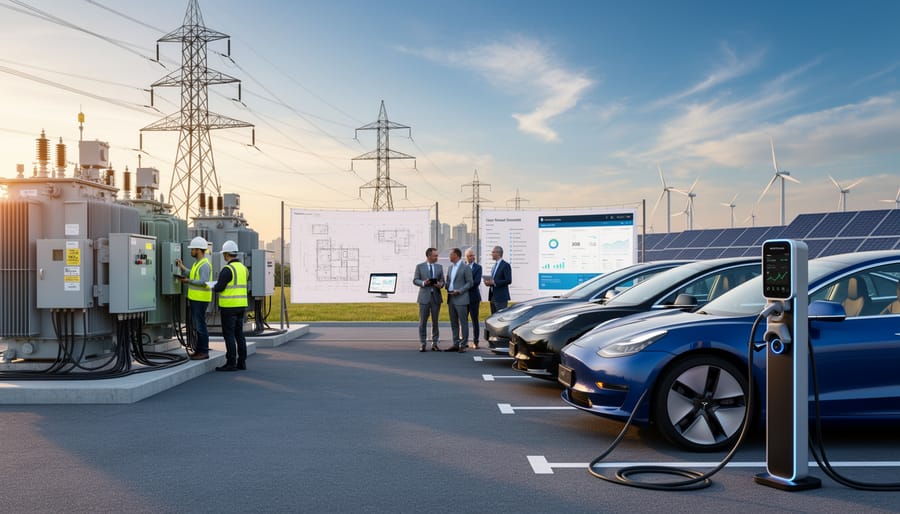
Clean energy investment funds are strategically allocating substantial capital toward EV charging infrastructure and comprehensive grid modernization initiatives. These investments address two critical components of the renewable energy transition: enabling widespread electric vehicle adoption and upgrading aging electrical infrastructure to accommodate variable renewable generation sources.
Federal programs like the National Electric Vehicle Infrastructure (NEVI) Formula Program have committed $5 billion to deploy public charging stations along highway corridors, creating essential connectivity for long-distance EV travel. Complementing this, grid modernization investments focus on smart grid technologies, energy storage systems, and transmission line upgrades that enhance grid resilience and flexibility. These improvements enable utilities to integrate higher percentages of solar and wind power while maintaining reliability standards consistent with ISO 9001:2015 quality management principles.
For renewable energy professionals and procurement managers, these infrastructure investments create significant opportunities across equipment manufacturing, installation services, and ongoing maintenance contracts. The coordinated approach to EV infrastructure and grid enhancement represents a foundational step toward achieving carbon neutrality goals while stimulating economic growth throughout the clean energy supply chain.
Clean energy investment funds are strategically targeting domestic manufacturing capabilities to strengthen supply chain resilience and reduce dependence on foreign suppliers. These funds allocate capital toward establishing production facilities for renewable energy components including solar panels, wind turbine assemblies, battery storage systems, and inverter technologies. By incentivizing onshore manufacturing through low-interest loans, tax credits, and equity investments, funds address critical supply chain vulnerabilities exposed during recent global disruptions. This approach creates high-quality jobs in manufacturing, engineering, and logistics sectors while ensuring compliance with quality standards like ISO 9001:2015 certification. Procurement managers benefit from shortened lead times and enhanced supply security, while sustainability officers can verify environmental and labor standards throughout the production chain. The resulting domestic ecosystem reduces carbon emissions associated with international shipping and supports regional economic development, positioning North American manufacturers as competitive players in the global renewable energy market.

Government-backed clean energy investment funds fundamentally transform project economics by mitigating financial risks that traditionally deter private capital. These funds provide credit enhancements, loan guarantees, and first-loss capital positions that significantly improve project bankability. When government entities absorb initial risks, renewable energy projects become more attractive to commercial lenders and institutional investors who require predictable returns and reduced exposure.
This de-risking mechanism proves particularly valuable for innovative technologies and infrastructure projects with longer payback periods. By providing patient capital and favorable financing terms, government funds bridge the gap between early-stage development and commercial viability. Financial institutions increasingly recognize government participation as a quality signal, leading to improved credit ratings and lower interest rates for renewable projects.
The impact extends beyond individual projects to entire market sectors. Government-backed funds establish standardized underwriting criteria and performance benchmarks that create transparency and build investor confidence. This standardization, combined with quality assurance frameworks like ISO 9001:2015 certification, reduces due diligence costs and accelerates project approval timelines.
For renewable energy professionals and procurement managers, understanding these risk mitigation structures enables more strategic project development and financing approaches, ultimately accelerating the transition to sustainable energy infrastructure while maintaining fiscal responsibility.
Clean energy investment funds serve as powerful catalysts for supply chain stabilization and growth by generating sustained, predictable demand for renewable energy components and infrastructure. When government-backed funds commit billions to solar, wind, and energy storage projects, manufacturers of photovoltaic panels, wind turbines, inverters, and battery systems gain the market confidence necessary for capacity expansion and long-term planning. This predictable demand stream enables suppliers to optimize production schedules, negotiate better raw material contracts, and achieve economies of scale that reduce per-unit costs across the industry.
The ripple effects extend throughout the procurement ecosystem. Cable manufacturers, mounting system producers, and specialty hardware suppliers benefit from multi-year project pipelines that allow for strategic inventory management and reduced lead times. Logistics providers experience similar advantages as they develop specialized expertise in transporting oversized wind turbine components and coordinating complex delivery schedules for large-scale solar installations. Many suppliers working with fund-backed projects implement ISO 9001:2015 certification to meet stringent quality requirements, elevating industry standards across the board.
For procurement managers and supply chain professionals, these investment funds create opportunities to establish preferred vendor relationships and develop sustainability-focused procurement strategies. The transparency inherent in government-backed financing often requires comprehensive reporting on component sourcing and manufacturing practices, driving suppliers toward more sustainable production methods and ethical sourcing commitments. This transformation strengthens the entire renewable energy value chain while supporting North America’s transition to clean energy infrastructure.
Accessing clean energy investment funds requires careful navigation of administrative requirements and compliance standards. Fund administrators typically establish strict eligibility criteria to ensure capital flows to viable, sustainable projects. Key requirements often include detailed project proposals, financial viability assessments, environmental impact studies, and proof of technical expertise.
Quality certifications significantly strengthen applications and demonstrate organizational credibility. ISO 9001:2015 certification serves as a valuable asset, showcasing commitment to quality management systems and operational excellence. Many government-backed funds prioritize applicants with recognized certifications, viewing them as lower-risk investments with higher success potential.
Procurement managers and sustainability officers should prepare comprehensive documentation including project timelines, carbon reduction metrics, job creation forecasts, and supply chain transparency. Compliance requirements may also encompass labor standards, domestic content provisions, and environmental justice considerations. Understanding regional variations in application processes across North American jurisdictions proves essential, as federal, state, and provincial programs maintain distinct criteria. Engaging early with fund administrators and maintaining robust quality management systems positions organizations favorably for securing clean energy financing opportunities.
The competitive landscape for clean energy investment funds has intensified significantly, with government-backed programs attracting substantial interest from renewable energy developers, manufacturers, and infrastructure providers. Success in securing funding requires strategic positioning that demonstrates both technical excellence and measurable sustainability impact.
Projects aligned with ISO 9001:2015 certification standards gain competitive advantages by showcasing systematic quality management and operational reliability. Fund administrators prioritize applications that present comprehensive documentation, realistic timelines, and clear environmental benefits including carbon reduction metrics and lifecycle assessments.
Effective positioning strategies include building partnerships across the supply chain, demonstrating local economic benefits through job creation, and highlighting innovation in energy storage or grid integration technologies. Procurement managers should emphasize vendor qualifications and proven track records in similar projects.
Geographic considerations also influence fund allocation, as programs often prioritize underserved communities, brownfield redevelopment, or regions with high renewable energy potential. Sustainability officers can strengthen applications by quantifying long-term environmental impacts and community engagement plans.
Understanding evaluation criteria specific to each funding program enables renewable energy professionals to tailor proposals effectively. Competitive applicants demonstrate financial viability, technical feasibility, and alignment with broader decarbonization goals while maintaining clear communication throughout the application process.
The clean energy investment landscape continues to evolve rapidly, driven by escalating climate commitments and technological advancement. Government investment funds are expected to expand significantly through 2030 and beyond, particularly as nations work toward net-zero emissions targets. The Infrastructure Investment and Jobs Act and Inflation Reduction Act have established a foundation that subsequent legislation will likely build upon, creating sustained momentum for renewable energy professionals.
Emerging trends indicate increasing focus on energy storage solutions, green hydrogen infrastructure, and grid modernization projects. Investment funds are prioritizing integrated systems that combine generation, storage, and distribution capabilities. Additionally, offshore wind development and advanced solar technologies are receiving enhanced attention from both federal and state-level programs. Supply chain localization remains a strategic priority, creating opportunities for domestic manufacturers and component suppliers who can demonstrate quality management systems such as ISO 9001:2015 certification.
To position effectively for upcoming opportunities, renewable energy professionals should develop expertise in emerging technologies while maintaining strong sustainability credentials. Understanding fund application processes, compliance requirements, and reporting standards will prove essential as competition for capital intensifies. Building relationships with financial institutions, government agencies, and industry coalitions enhances access to information about new funding rounds and program modifications.
Strategic preparation includes conducting thorough market analysis, developing robust project proposals that emphasize environmental impact alongside financial returns, and cultivating partnerships that strengthen project viability. Professionals should monitor policy developments at federal, state, and local levels, as funding mechanisms increasingly incorporate performance-based incentives and sustainability metrics. Those who align their capabilities with government priorities around decarbonization, job creation, and supply chain resilience will find themselves well-positioned to capitalize on the expanding clean energy investment ecosystem.
Government clean energy investment funds represent a pivotal force in accelerating the renewable energy transition across North America. These strategic funding mechanisms are catalyzing unprecedented growth in solar, wind, energy storage, and grid modernization projects, creating substantial opportunities for industry professionals and organizations committed to sustainable infrastructure development.
The success of this investment wave, however, extends beyond capital allocation. Maximizing the long-term benefits of government-backed clean energy funds requires a steadfast commitment to quality, reliability, and proven performance. Organizations seeking to capitalize on these opportunities must prioritize partnerships with suppliers who maintain rigorous quality standards, including ISO 9001:2015 certification, ensuring that every component and system meets stringent performance benchmarks essential for project success.
Strategic partnerships with certified solution providers enable renewable energy professionals to deliver projects that not only meet immediate funding requirements but also achieve lasting environmental impact and operational excellence. These collaborations ensure proper integration of advanced technologies, compliance with evolving regulatory frameworks, and optimization of total lifecycle costs.
As procurement managers and sustainability officers navigate this expanding landscape, the emphasis must remain on selecting partners who demonstrate technical expertise, proven track records, and unwavering commitment to sustainability goals. The convergence of substantial government investment, innovative renewable technologies, and quality-focused implementation creates an unprecedented opportunity to build resilient, efficient, and truly sustainable energy infrastructure that will power North America’s clean energy future for decades to come.