
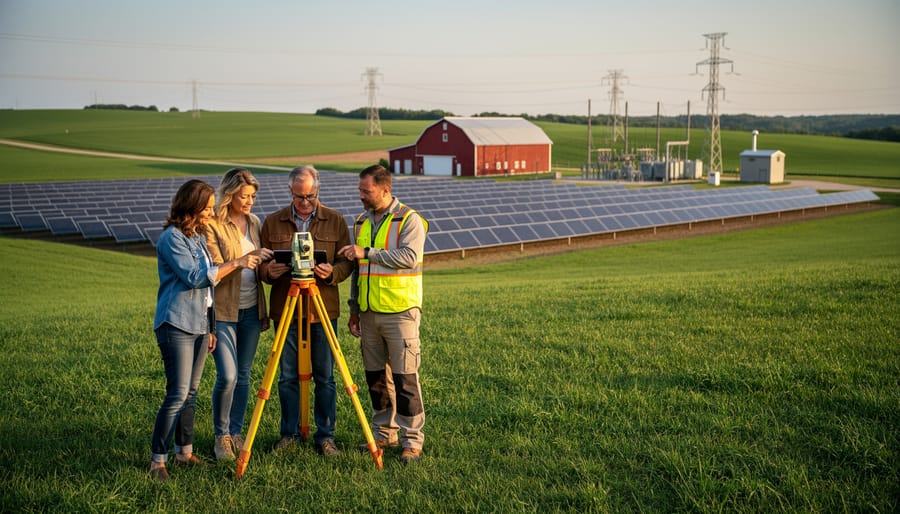
Negotiate equitable land divisions before exploring development opportunities. When inherited property split between siblings becomes complicated by solar development potential, establish clear ownership structures first. Commission professional land surveys to identify optimal solar zones based on irradiance data, grid connectivity, and topographical features, then divide parcels to maximize each heir’s development capacity rather than defaulting to equal acreage splits.
Secure preliminary interconnection studies from local utilities immediately. Solar projects require specific grid infrastructure capacity, and interconnection queue positions often determine project viability. Properties with favorable interconnection status command significantly higher lease rates—typically $800-$1,200 per acre annually—making this assessment critical before finalizing any property division agreement.
Structure joint development agreements when subdivision proves impractical. Many inherited properties perform better as unified solar sites rather than fragmented parcels. Heirs can maintain proportional ownership while engaging a single solar developer, streamlining permitting processes and reducing infrastructure costs. This approach preserves economies of scale that maximize revenue potential while respecting each heir’s financial interests.
Prioritize ISO 9001:2015-certified engineering firms for feasibility assessments. Quality infrastructure planning determines long-term project performance and revenue stability. Professional evaluations identify optimal equipment placement, electrical design requirements, and environmental compliance needs before property division becomes legally binding, preventing costly modifications later.
The intersection of inheritance law and renewable energy development creates unique opportunities for families willing to approach land division strategically. Solar development transforms agricultural or vacant land into consistent revenue streams while advancing sustainability goals, but success requires coordinating family dynamics with technical requirements and regulatory frameworks from the project’s inception.
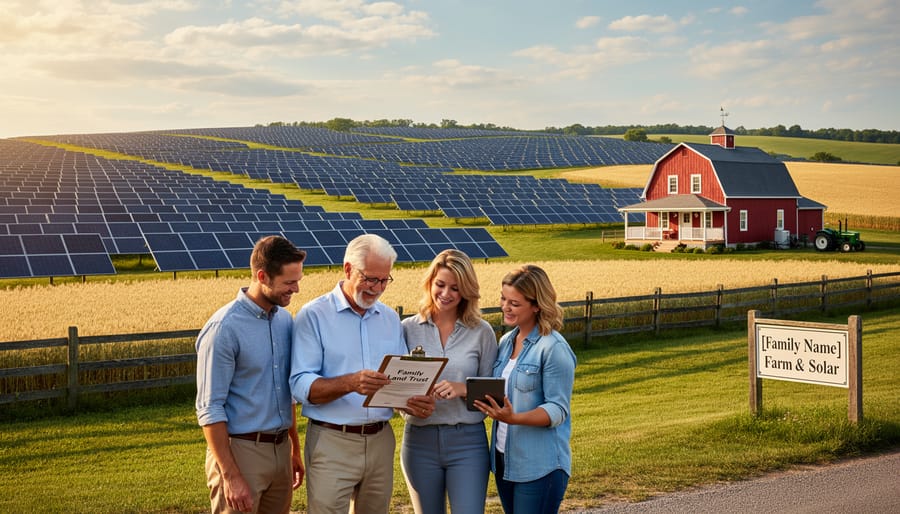
Solar developers evaluate specific technical criteria when assessing land parcels for photovoltaic installations, particularly important when inherited property is being divided among multiple heirs. Understanding these requirements helps families make informed decisions about which portions of land offer the greatest solar development potential.
Most utility-scale solar projects require a minimum of 20 to 40 contiguous acres, though smaller parcels between 5 and 10 acres may qualify for community-scale installations. The ideal terrain features minimal slope, typically less than 5 percent grade, which reduces grading costs and optimizes panel placement. Level or gently sloping land oriented toward true south maximizes energy generation throughout the day.
Solar irradiance levels represent a critical evaluation factor. Developers seek locations receiving at least 4.5 peak sun hours daily, with minimal shading from trees, structures, or topographical features. Sites in regions with higher irradiance levels generate more electricity and provide better returns on investment, making them more attractive for long-term lease agreements.
Proximity to electrical infrastructure significantly impacts project feasibility. Properties located within one mile of existing transmission lines or substations with available capacity offer substantial advantages. Grid interconnection costs can represent 10 to 20 percent of total project expenses, so closer proximity to infrastructure reduces development complexity and timeline.
Additional considerations include soil stability, environmental restrictions, zoning compliance, and road access for construction equipment. Properties meeting these technical specifications offer families dividing inherited land an opportunity to preserve agricultural character while generating sustainable income through renewable energy development, supporting both financial goals and environmental stewardship.
Solar development offers compelling financial advantages over traditional agricultural land use, particularly for families dividing inherited property among multiple heirs. While agricultural operations typically generate annual revenues of $200-500 per acre depending on crop selection and market conditions, solar ground leases consistently provide $800-1,200 per acre annually with minimal operational involvement. This predictable income stream transforms inherited land into a stable revenue source that supports equitable distribution among heirs without requiring active management or specialized agricultural expertise.
The solar system benefits extend beyond immediate lease payments to include favorable property tax implications. Many jurisdictions offer tax incentives for renewable energy installations, potentially reducing assessment values while maintaining steady income. This combination creates enhanced cash flow compared to traditional farming, which faces volatile commodity prices and increasing operational costs.
Long-term revenue stability represents perhaps the most significant advantage for heirs seeking sustainable financial planning. Solar lease agreements typically span 20-30 years with built-in escalation clauses, providing inflation-protected income that agricultural operations struggle to match. For multiple heirs, this predictable revenue stream simplifies estate planning and reduces family conflicts over property management decisions. The minimal maintenance requirements and guaranteed payments allow heirs to pursue independent careers while benefiting from shared property ownership. Furthermore, solar installations align with growing corporate sustainability commitments, ensuring continued demand and stable lease rates throughout the agreement term, making this option increasingly attractive for families prioritizing both financial returns and environmental stewardship.
When dividing inherited land for solar development, understanding ownership models is essential for maximizing both family harmony and renewable energy potential. Three primary models offer distinct advantages depending on your specific circumstances and development goals.
Physical partition divides the property into separate parcels, granting each heir exclusive ownership of a designated portion. This approach works well when the land area is substantial enough to accommodate multiple viable solar installations and local zoning permits subdivision. Each owner can independently pursue solar development, selecting their own contractors and financing arrangements. However, physical division may fragment optimal solar sites or create parcels too small for efficient photovoltaic systems.
Partition by sale involves selling the entire property and distributing proceeds among heirs. This option suits families seeking clean financial separation or when the property cannot be physically divided effectively. Sale proceeds can then fund individual renewable energy investments elsewhere, though this eliminates the specific land’s solar development potential.
Tenancy-in-common arrangements allow multiple heirs to maintain shared ownership while pursuing unified solar development. This model often proves most effective for utility-scale projects requiring larger contiguous areas. Co-owners can negotiate a single solar lease or power purchase agreement, streamlining development and maximizing economies of scale. Decision-making protocols and profit-sharing agreements must be clearly documented to prevent future conflicts.
For renewable energy professionals advising property heirs, tenancy-in-common typically offers the strongest pathway for significant solar installations. This approach preserves site integrity, reduces infrastructure duplication, and attracts quality developers seeking substantial capacity. Professional mediation and transparent governance structures ensure sustainable collaboration while advancing clean energy objectives.
When siblings commit to solar development on inherited land, a comprehensive partnership agreement protects everyone’s interests while establishing clear operational parameters. These solar-specific agreements serve as the foundation for successful long-term collaboration, addressing unique technical and financial considerations that standard property division contracts often overlook.
The lease negotiation framework should designate a lead negotiator while preserving each sibling’s veto power over major terms. This structure balances efficiency with shared control. Key provisions must address lease duration (typically 20-30 years for solar projects), renewal options, and escalation clauses that account for energy market fluctuations. The agreement should establish minimum acceptable terms for developer proposals, including upfront payments, annual lease rates per acre, and performance guarantees tied to actual energy production.
Revenue distribution mechanisms require precision beyond simple percentage splits. Effective agreements specify payment schedules, accounting methods, and reserve fund contributions for property maintenance and unexpected costs. Consider implementing tiered distribution models that reward siblings who assume greater management responsibilities or provide initial capital for land preparation and infrastructure improvements that meet ISO 9001:2015 quality standards.
Decision-making authority should follow a graduated approach based on financial impact thresholds. Routine maintenance approvals might require simple majority consent, while major modifications to solar infrastructure or lease amendments necessitate unanimous agreement. Designate one sibling as the primary contact for developer communications to streamline operations while requiring written consent for binding commitments.
Exit strategies prevent future conflicts by establishing clear buyout formulas, right-of-first-refusal protocols, and dispute resolution procedures. Include provisions for mediation and arbitration before litigation, reducing costs while preserving family relationships. Address succession planning by defining how ownership transfers to the next generation, ensuring the solar development continues benefiting your family while advancing clean energy goals and environmental sustainability for decades ahead.

Before dividing inherited land for solar development, conducting a comprehensive feasibility assessment ensures each parcel maximizes its renewable energy potential while maintaining equitable value distribution among heirs. This critical evaluation process protects family interests and attracts quality developers.
Begin by assessing physical site characteristics. Qualified solar professionals should evaluate sun exposure patterns, shading obstacles, terrain slope, and soil conditions across the entire property. Geographic orientation matters significantly for solar energy production, with south-facing parcels in North America typically offering optimal performance. Document vegetation that may require clearing and identify any wetlands or protected areas that could restrict development.
Infrastructure assessment follows site evaluation. Examine proximity to electrical grid connection points, as transmission distance directly impacts project economics. Evaluate existing access roads and determine if upgrades are necessary for equipment delivery and maintenance vehicles. Understanding utility interconnection requirements early prevents costly surprises during permitting.
Request preliminary quotes from multiple solar developers or engineering firms holding ISO 9001:2015 certification, ensuring quality standards throughout the assessment process. These quotes should address panel capacity potential, estimated energy output, and preliminary infrastructure costs including inverters, transformers, and cable management systems. Cable routing and electrical component placement often influence parcel boundaries, so coordinate these technical requirements with your division planning.
Professional energy assessments typically include soil testing, topographic surveys, and environmental impact evaluations. This data-driven approach supports informed decision-making while demonstrating sustainability commitment to potential development partners and financing institutions.
Selecting the right solar development partner is critical when converting inherited land into productive renewable energy assets. This decision directly impacts long-term returns, project quality, and family legacy preservation.
When evaluating partnership structures, consider whether a lease agreement or direct development arrangement better serves your family’s objectives. Lease agreements provide predictable passive income with minimal operational responsibility, making them ideal for families seeking steady revenue without active involvement. Direct development partnerships, conversely, may offer higher returns but require greater capital investment and risk tolerance. Your choice should align with the heirs’ financial goals, risk appetite, and desired level of involvement.
Developer credentials deserve thorough scrutiny. Examine track records including completed projects, financial stability, and references from landowners with similar properties. Request detailed portfolio information demonstrating experience with projects of comparable scale and geographic location. A qualified developer should transparently share performance data, interconnection success rates, and long-term operational metrics.
Quality assurance certifications provide essential validation of operational excellence. ISO 9001:2015 certification indicates a developer maintains rigorous quality management systems across planning, construction, and operational phases. This internationally recognized standard ensures consistent processes, continuous improvement, and stakeholder satisfaction throughout the project lifecycle.
Additionally, evaluate the developer’s commitment to environmental stewardship beyond compliance requirements. Partners prioritizing sustainability implement best practices for land conservation, biodiversity protection, and community engagement. Request information about decommissioning plans, soil preservation strategies, and local hiring commitments. These factors contribute to both environmental impact and community acceptance, ultimately protecting your family’s reputation and the land’s future value.
When dividing inherited land for solar development, families must choose between equal and proportional distribution strategies, each offering distinct advantages depending on circumstances. Equal distribution provides each heir with identical shares regardless of contribution levels, simplifying agreements and maintaining family harmony. This approach works well when all parties commit similar resources and effort to the solar project.
Proportional distribution allocates returns based on measurable inputs such as land ownership percentages, initial capital contributions, or management responsibilities. This method recognizes that some heirs may contribute larger parcels suitable for solar arrays, while others provide technical expertise or project management. For renewable energy professionals advising families, proportional models often align better with industry standards and investment frameworks.
Consider a scenario where three siblings inherit property: one contributes 60% of suitable land area, another provides 30% of development capital, and the third manages permitting and operations. A proportional structure might allocate revenue shares reflecting these varied contributions, creating equitable outcomes that recognize different value inputs.
The choice between strategies significantly impacts power purchase agreements, financing structures, and long-term sustainability. Documentation following ISO 9001:2015 quality standards ensures transparency in whatever distribution method families select. Professional guidance helps establish clear metrics for contributions, preventing disputes while maximizing the environmental and financial benefits of solar development across the inherited property.
Establishing a clear financial framework before beginning solar development protects all co-owners and ensures project success. Initial costs typically include partition surveys, environmental assessments, title work, and legal documentation to formalize the land division. Co-owners should create a detailed cost-sharing agreement that proportionally allocates these expenses based on each party’s ownership stake or future revenue share.
For solar-specific preparation, anticipate expenses including site grading, access road construction, electrical infrastructure upgrades, and interconnection studies. These costs vary significantly by location and project scale, making early-stage feasibility assessments essential. Consider establishing a joint LLC or partnership entity to manage these collective expenses and maintain transparent accounting practices that satisfy ISO 9001:2015 standards for quality management.
Ongoing maintenance responsibilities must address both operational and administrative needs. Solar facilities require vegetation management, panel cleaning, equipment monitoring, and periodic component replacement over their 25-30 year lifespan. Define whether the solar developer assumes these responsibilities through a lease agreement or if co-owners retain certain obligations for property boundaries and access routes.
Create a contingency fund for unexpected repairs or system upgrades, funded through a percentage of revenue distributions. This proactive approach prevents future disputes while ensuring the installation maintains optimal performance and maximizes long-term sustainability benefits for all stakeholders.
Successful solar development on divided inherited land requires robust infrastructure that ensures grid connection reliability and long-term performance. Cable management systems form the backbone of any installation, with proper voltage cables sized appropriately for your system’s electrical load and distance to connection points. High-quality electrical components, including inverters, combiners, and disconnect switches, must meet stringent safety standards while maximizing energy conversion efficiency.
Grid connection infrastructure demands particular attention when multiple heirs share adjacent solar parcels. Coordinated planning of transformer pads, metering equipment, and utility interconnection points can reduce collective costs while maintaining individual ownership boundaries. Weather-resistant enclosures, grounding systems, and surge protection devices safeguard investments against environmental stresses common in solar installations.
Procurement managers should prioritize suppliers with ISO 9001:2015 certification, ensuring consistent quality across all accessory solutions from mounting hardware to monitoring systems. This infrastructure foundation not only optimizes energy production but also enhances property value for all stakeholders involved in the inherited land division, supporting both financial returns and sustainability objectives throughout the project lifecycle.
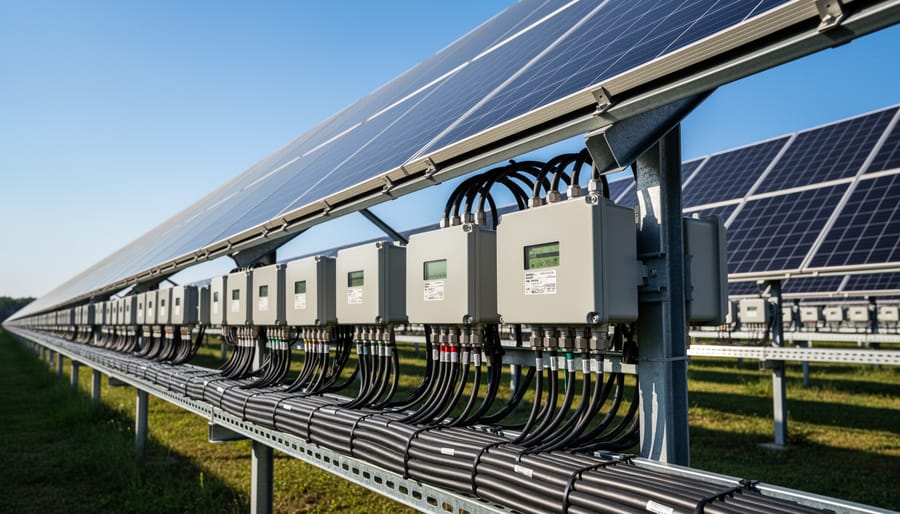
When dividing inherited land for solar development, selecting quality components and partners becomes critical for ensuring project success over 25-30 year lifecycles. Working with ISO 9001:2015 certified suppliers guarantees adherence to international quality management standards, reducing long-term maintenance costs and system failures that could diminish returns for all family stakeholders.
Proper engineering support from the design phase through commissioning ensures optimal system performance and compliance with electrical codes and utility requirements. This expertise proves particularly valuable when multiple heirs share project ownership, as professionally engineered systems minimize disputes over performance shortfalls and maintenance responsibilities.
Supply chain logistics significantly impact project timelines and component quality. Establishing relationships with certified distributors who maintain rigorous testing protocols and transparent sourcing practices protects your investment. Components like inverters, mounting systems, and especially cable infrastructure reliability directly influence system uptime and energy production.
For inherited land projects, prioritizing quality over initial cost savings delivers superior long-term value. Reliable systems generate predictable revenue streams, facilitate easier financing, and provide peace of mind for families navigating shared ownership. This approach aligns sustainability goals with financial prudence, ensuring your solar investment benefits current stakeholders and future generations.

Disagreements among siblings regarding solar development on inherited property are common and understandable. Each heir may have different financial needs, environmental values, or visions for the land’s future use. When consensus proves elusive, several strategic approaches can help resolve the impasse while preserving family relationships.
Begin by facilitating open dialogue where all parties can express their concerns without judgment. Opposition often stems from misconceptions about solar development—such as worries about land degradation, property value impacts, or irreversible changes. Engaging renewable energy professionals to provide technical presentations can address these concerns with data-driven insights about minimal environmental impact, land restoration protocols, and the potential for dual-use applications like agrivoltaics.
If educational efforts don’t bridge the gap, explore structured compromise solutions. These might include limiting solar development to a specific portion of the property, implementing enhanced environmental protections, or establishing revenue-sharing arrangements that provide financial benefits to opposing siblings without requiring their direct involvement.
When fundamental disagreements persist, buyout options become necessary. Siblings favoring solar development may purchase the shares of those opposing it, or alternatively, the opposing party might buy out those supporting development. Professional property appraisals ensure fair market valuations, while financing options through agricultural lenders or solar developers can facilitate these transactions. Mediation services specializing in estate matters provide neutral ground for negotiating equitable solutions that honor both family dynamics and individual preferences.
Heirs often face differing financial circumstances when inheriting land suitable for solar development. One sibling may require immediate income while others prefer long-term investment returns. Structured payment solutions can address these varying needs effectively.
Power Purchase Agreements (PPAs) typically offer steady income streams over 20-25 years, but some solar developers can structure upfront payments or accelerated payment schedules for heirs requiring immediate liquidity. Consider negotiating milestone-based payments that release larger sums during project construction phases while maintaining ongoing royalties for other stakeholders.
Refinancing inherited property for solar development presents another viable option. Heirs can leverage the land’s enhanced value as a proposed solar site to secure loans, providing immediate capital to those with urgent needs while preserving ownership stakes. This approach allows family members to buy out siblings who prefer lump-sum payments while maintaining the property’s development potential.
Establish clear terms through family limited partnerships or LLC structures that accommodate different distribution preferences. These entities can manage cash flow allocation based on individual heir requirements while ensuring equitable long-term value distribution. Professional mediators specializing in renewable energy projects help navigate these conversations, focusing on sustainable solutions that honor both immediate financial needs and multi-generational wealth building through clean energy infrastructure.
Developing inherited land for solar energy creates unique tax considerations that require careful planning to maximize financial benefits. Understanding these implications helps heirs make informed decisions that align with both family goals and long-term sustainability objectives.
From an income tax perspective, solar development on inherited land typically qualifies for the Investment Tax Credit (ITC), currently offering a 30% credit for solar installations. This substantial benefit can significantly improve project economics, though eligibility requirements and timing considerations warrant consultation with tax professionals familiar with renewable energy incentives. Additionally, accelerated depreciation through the Modified Accelerated Cost Recovery System (MACRS) allows property owners to depreciate solar equipment over five years, creating valuable tax deductions during the project’s early operational phase.
Property tax treatment varies considerably by jurisdiction. Many states offer property tax exemptions or abatements for solar installations, recognizing their contribution to clean energy goals. However, dividing inherited land specifically for solar development may trigger reassessment, potentially increasing property tax obligations. Understanding local assessment practices before finalizing land division agreements proves essential for accurate financial modeling.
The stepped-up basis rule for inherited property provides strategic advantages. Heirs receive a cost basis equal to the property’s fair market value at the time of inheritance, potentially eliminating capital gains accumulated during the original owner’s lifetime. This creates opportunities for more favorable tax treatment when entering long-term solar lease agreements or selling energy generation rights.
Estate planning opportunities emerge when siblings structure ownership arrangements thoughtfully. Creating limited liability companies or partnership structures can facilitate equitable distribution of solar revenue while maintaining family harmony. These entities also provide liability protection and simplified succession planning for future generations who may inherit ongoing solar operations, ensuring sustainable energy production continues benefiting both the family and the environment for decades ahead.
Dividing inherited land presents unique challenges for families, but solar development transforms this complexity into a compelling opportunity for sustainable income generation, environmental stewardship, and preserved family legacy. By converting underutilized agricultural or vacant property into productive solar infrastructure, heirs create long-term revenue streams that benefit all stakeholders while contributing meaningfully to renewable energy goals and carbon reduction targets.
Success in this endeavor requires three essential elements: professional guidance, quality infrastructure partnerships, and transparent family communication. Engaging experienced legal counsel, tax advisors, and solar development consultants ensures that property divisions align with regulatory requirements while maximizing financial returns. Selecting infrastructure partners with proven credentials, including ISO 9001:2015 certification, guarantees that installations meet rigorous quality standards and deliver reliable performance over decades of operation.
Clear communication among family members establishes shared expectations, equitable benefit distribution, and conflict resolution mechanisms that preserve relationships beyond the transaction. When combined with comprehensive site assessments, appropriate ownership structures, and well-negotiated agreements, these elements create a framework for transforming inherited property challenges into sustainable solutions.
The renewable energy sector continues expanding rapidly, driven by technological advancement and urgent climate action imperatives. Families who embrace solar development on inherited land position themselves at the intersection of economic opportunity and environmental responsibility, creating income sources that honor the past while building a cleaner energy future. With proper planning and expert guidance, inherited property becomes more than divided assets; it becomes a lasting contribution to sustainability and family prosperity.