
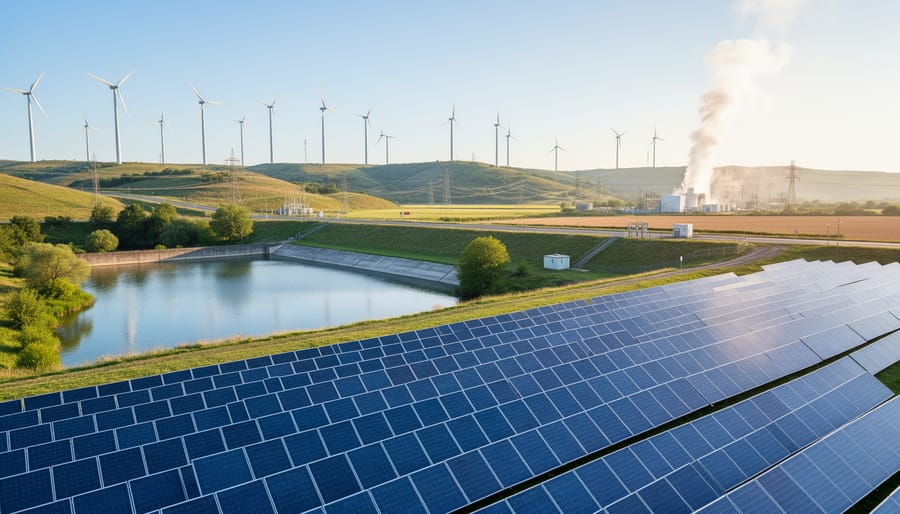
Renewable energy is energy generated from natural sources that replenish themselves on a human timescale, including sunlight, wind, water, biomass, and geothermal heat. Unlike fossil fuels that take millions of years to form and deplete with use, renewable energy systems harness flows and cycles that occur continuously in the natural environment.
The distinction matters because renewable energy technologies deliver power without depleting finite resources or producing the carbon emissions driving climate disruption. For professionals specifying equipment, managing procurement, or evaluating project feasibility in 2026, understanding concrete examples of these systems in operation clarifies which technologies suit specific applications, how they function in real conditions, and what performance metrics to expect.
This article examines renewable energy through working examples across five primary categories: solar photovoltaic and thermal installations, onshore and offshore wind farms, hydroelectric facilities from run-of-river to pumped storage, biomass conversion systems, and geothermal power plants. Each section explains operational principles, current deployment scale, and verified 2026 projects demonstrating the technology at work.
The renewable energy sector has matured beyond pilot projects. Utility-scale solar farms now exceed 1,000 MW in single installations. Offshore wind turbines generate 15+ MW per unit. Pumped hydro storage balances grid demand across continents. These aren’t experimental concepts but proven systems meeting baseload and peak power requirements with quantifiable reliability.
For sustainability officers and engineers evaluating renewable solutions, the challenge isn’t whether these technologies work but which combinations address specific energy profiles, grid constraints, and certification requirements like ISO 9001:2015 quality standards that ensure component reliability throughout project lifecycles. The examples ahead provide that decision framework.
Renewable energy refers to power derived from natural sources that regenerate continuously within human timescales, contrasting sharply with finite fossil fuels that deplete through extraction. The distinction is fundamental: while conventional energy draws down millennia-old carbon reserves, renewable systems harvest energy flows that naturally replenish, sunlight arriving daily, wind patterns driven by atmospheric dynamics, water cycling through hydrological systems, and geothermal heat radiating from Earth’s core.
Three core principles define a truly renewable energy source. First, natural replenishment occurs at a rate equal to or exceeding human consumption, ensuring the resource base remains intact across generations. Second, renewable energy emits little to no greenhouse gases during operation, minimizing lifecycle environmental impact compared to combustion-based generation. Third, sustainable availability means the energy source can support long-term infrastructure investment without resource exhaustion, a 25-year solar array or 30-year wind turbine operates within the natural system’s capacity to deliver energy indefinitely.
Quality deployment of renewable infrastructure demands rigorous standards. ISO 9001:2015 certification ensures systematic quality management across engineering, procurement, and installation processes, critical when renewable projects involve complex supply chains spanning solar panels, wind turbine components, cable systems, and grid integration equipment. Professional renewable certifications validate technical competency in designing and managing these systems to performance specifications that match the resource’s natural availability patterns.
The technical challenge lies not just in capturing renewable energy, but in building reliable infrastructure that converts variable natural flows into dispatchable power. This requires precision engineering, certified components, and supply chain excellence, the foundation for North America’s accelerating energy transition in 2026.
Renewable energy systems operate through a four-stage conversion process that transforms natural phenomena into grid-ready electricity or thermal power. The cycle begins with energy capture, where specialized equipment intercepts and harvests renewable resources, photovoltaic panels absorb solar radiation, wind turbines extract kinetic energy from moving air, hydroelectric generators harness flowing water, and geothermal systems tap subsurface heat. Each capture technology is engineered to maximize energy extraction efficiency while withstanding environmental exposure over multi-decade operational lifespans.
The second stage converts captured energy into usable electrical current through power electronics and mechanical systems. Solar inverters transform direct current from photovoltaic arrays into alternating current synchronized with grid frequency and voltage parameters. Wind turbines use gearboxes and generators to convert rotational mechanical energy into three-phase electrical output. This conversion stage requires precision engineering because voltage fluctuations, harmonic distortion, or phase imbalances compromise both equipment longevity and grid stability. Component quality at this stage directly determines system reliability and energy yield over time.
Grid integration represents the third critical stage, where converted electricity enters transmission and distribution networks. This process demands sophisticated infrastructure including transformers to step voltage up for long-distance transmission or down for local distribution, protective relays to isolate faults, and monitoring systems that track power quality metrics in real time. The physical connection relies on properly rated voltage cable types engineered to handle continuous current loads, voltage transients, and environmental stresses without degradation. Medium-voltage cables linking solar arrays to substation transformers, for instance, must meet insulation standards that prevent breakdown under sustained operation and temperature cycling.
Energy storage systems provide the fourth operational component, buffering intermittent renewable generation to match consumption patterns. Battery energy storage installations charge during peak production periods and discharge when generation drops or demand spikes, smoothing the variable output inherent to solar and wind resources. Storage integration requires additional power conversion equipment, thermal management systems, and control algorithms that optimize charge-discharge cycles while preventing battery degradation. The entire storage subsystem depends on certified cabling, junction hardware, and monitoring infrastructure that meets ISO 9001:2015 quality standards.
Supply chain logistics underpin every operational stage because component availability, delivery timing, and material certification directly affect project commissioning schedules and long-term performance. A 4.86 MW solar installation requires thousands of individual components, panels, inverters, combiner boxes, disconnect switches, cables, and mounting hardware, all arriving on-site in coordinated sequences. Missing or substandard components delay energization and introduce failure points that compromise system economics. Renewable energy professionals recognize that operational success begins with procurement strategy and extends through installation quality control to ongoing maintenance protocols.
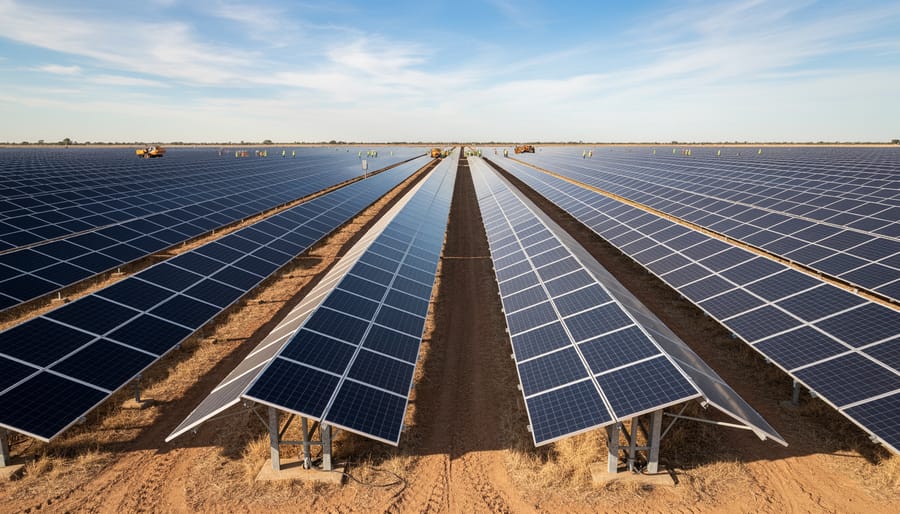
Solar energy projects represent the most widely deployed category of renewable energy infrastructure in 2026, ranging from residential rooftop arrays to utility-scale photovoltaic farms delivering hundreds of megawatts. The fundamental architecture combines photovoltaic modules that convert sunlight directly into DC electricity, inverters that transform DC to grid-compatible AC power, and mounting structures engineered to withstand decades of wind, snow, and thermal cycling. Solar thermal systems, though less common, capture heat for industrial processes or concentrated solar power generation. Both approaches demand rigorous cable management, particularly for high-voltage DC strings and AC distribution, where proper conductor sizing, insulation ratings, and termination quality directly affect system efficiency and fire safety.
A current illustration of utility-scale solar deployment is the 4.86 MW Smoky Lake project in Alberta, backed by Canada’s $9 million investment for the Métis Nation of Alberta. This installation demonstrates the engineering complexity of mid-scale renewable development: site preparation, array layout optimization for solar irradiance, inverter station design, and medium-voltage interconnection to the provincial grid. The project requires certified PV cables rated for outdoor exposure and UV resistance, combiner boxes to consolidate string outputs, and transformer-based step-up equipment to match grid voltage. Quality control at every component level, from module frames to cable glands, determines long-term performance and minimizes downtime.
Key components in solar installations include:
Engineering requirements extend beyond equipment selection to include soil analysis, structural load calculations, and arc-fault protection. For professionals evaluating smaller distributed generation, systems like a 2000 kWh solar installation illustrate the scalability of photovoltaic technology and the importance of matching panel capacity, inverter sizing, and electrical balance-of-system components to site-specific energy demand. Procurement teams sourcing materials for solar projects must verify ISO 9001:2015 certification and third-party testing to ensure components meet North American electrical codes and environmental exposure standards.
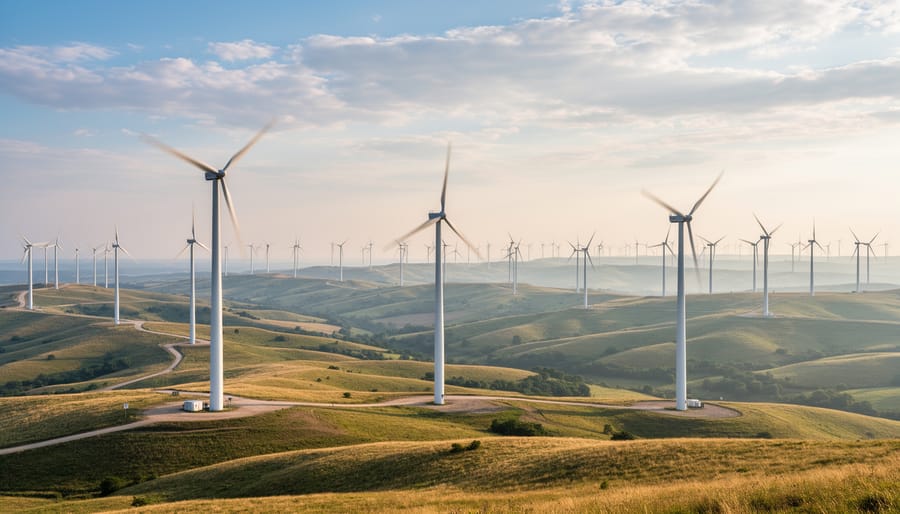
Wind turbines convert kinetic energy from moving air into electricity through three-blade rotors mounted on tall towers. When wind flows across the blades, it creates aerodynamic lift and drag forces that spin the rotor. This rotation drives a gearbox and generator inside the nacelle, the housing atop the tower, producing alternating current electricity that flows through power cables down the tower and into the grid or on-site distribution system.
Onshore wind farms dominate North America’s installed capacity in 2026, with turbines ranging from 2 MW units for distributed generation to 6 MW machines in utility-scale arrays. These installations require robust cabling infrastructure: medium-voltage cables carry power from each turbine to a central substation, while fiber-optic control cables manage turbine pitch, yaw, and braking systems. Cable trenching, termination quality, and weather-resistant connections directly affect uptime and maintenance costs over the turbine’s 20-plus-year operational life.
Offshore wind systems operate on similar principles but face harsher marine environments and larger scales. Modern offshore turbines exceed 12 MW capacity, and their subsea cable networks must withstand saltwater corrosion, tidal forces, and seabed movement. Export cables transmit power from offshore substations to coastal grid interconnection points, often spanning dozens of kilometers. Specialized cable protection systems, armored jackets, trenching, and rock placement, ensure long-term reliability.
Distributed wind applications serve remote communities, industrial facilities, and agricultural operations that benefit from on-site generation. These smaller turbines, typically under 1 MW, reduce transmission losses and improve energy security. They still demand engineered cable management, proper grounding, and certified components to meet electrical codes and maximize performance.
Regardless of scale, wind energy systems depend on supply chain precision: quality cables, reliable inverters, and tested interconnection hardware turn wind into dependable power.
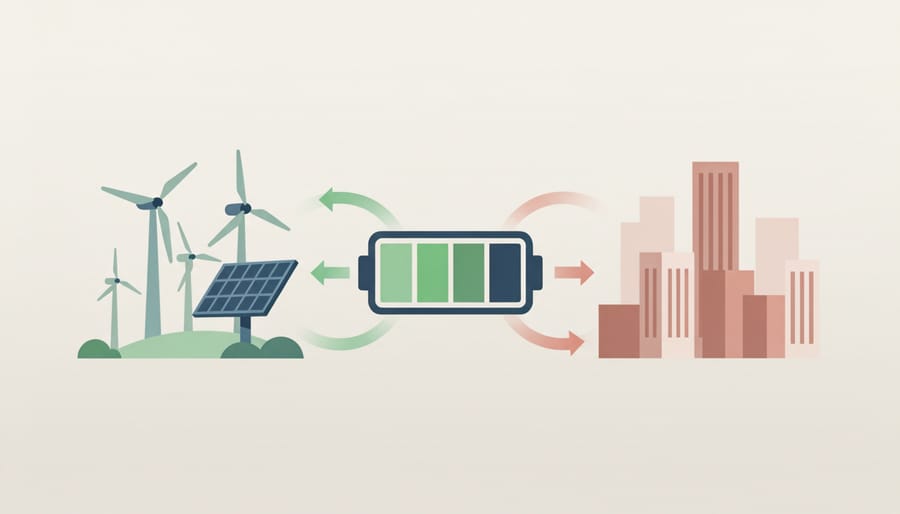
Battery energy storage systems and electric vehicle charging infrastructure represent critical enablers of renewable energy deployment, transforming intermittent generation into reliable, dispatchable power. BESS installations store excess energy during peak production periods and discharge it when demand exceeds supply, smoothing the variability inherent in solar and wind resources. These systems range from utility-scale facilities providing grid stabilization services to commercial installations supporting behind-the-meter energy management. The integration depends on high-performance battery modules, power conversion systems, sophisticated energy management software, and robust electrical infrastructure capable of managing bidirectional power flows.
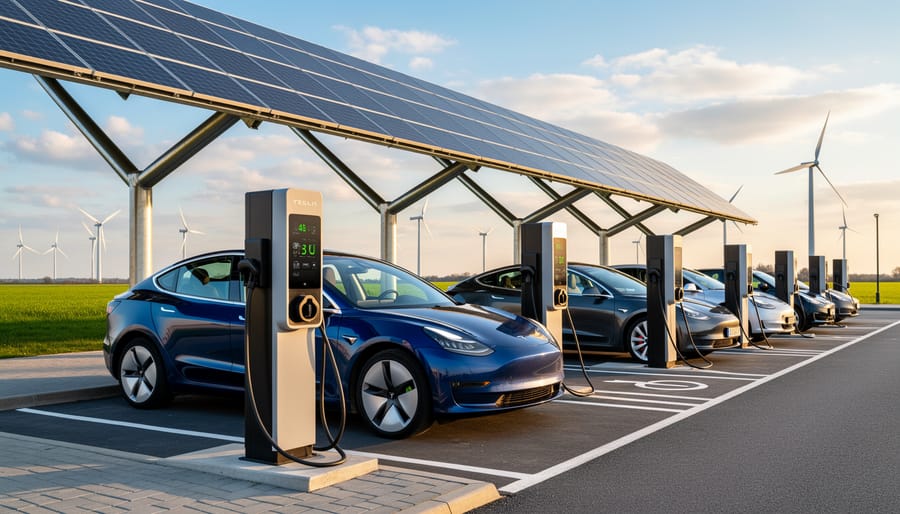
EV charging networks extend renewable energy’s reach into transportation electrification, creating new load profiles that align with clean generation when properly managed. Level 2 and DC fast-charging stations require carefully engineered cable systems, circuit protection, and network communications infrastructure to ensure safety and reliability. The quality of components in these installations directly impacts operational performance, with certified materials and properly specified conductors preventing thermal issues, voltage drop problems, and premature system failures.
Supply chain logistics play an essential role in both BESS and EV infrastructure deployment. Projects require coordinated delivery of battery modules, inverters, transformers, switchgear, and specialized cables that meet strict electrical and environmental specifications. ISO 9001:2015-certified supply chains ensure component traceability and quality control throughout procurement and installation phases. As North America accelerates battery material recycling initiatives, the focus on sustainable sourcing and end-of-life planning becomes integral to project engineering, reinforcing the closed-loop principles that define truly renewable energy systems.
Hydroelectric power remains North America’s largest renewable electricity source in 2026, with thousands of installations ranging from massive multi-gigawatt dams to run-of-river systems under 10 MW. Large-scale hydroelectric projects require extensive civil engineering, concrete dams, spillways, penstocks, and underground powerhouses, along with high-voltage transmission infrastructure to move power from remote watersheds to population centers. Small hydro and micro-hydro installations offer distributed generation opportunities in rural and industrial contexts, utilizing existing waterways with minimal environmental disruption. These systems depend on robust turbine-generator sets, control systems, and submarine or buried cabling rated for continuous wet environments.
Geothermal energy exploits subsurface heat reservoirs to generate electricity or provide direct heating. In the western United States and parts of western Canada, geothermal plants tap naturally occurring steam or hot water at depths of one to three kilometers. Binary cycle plants dominate newer installations, using heat exchangers and working fluids to drive turbines even from moderate-temperature resources. District heating networks in communities near geothermal fields deliver thermal energy for space heating and industrial processes. Infrastructure requirements include specialized drilling equipment, downhole pumps, corrosion-resistant piping, and heat exchangers manufactured to withstand high temperatures and mineral-laden fluids.
Marine renewable technologies, including tidal stream turbines and wave energy converters, remain in demonstration and early commercial phases across North America. Tidal systems installed in the Bay of Fundy and Puget Sound harness predictable tidal currents through underwater turbines anchored to the seabed. These projects demand marine-grade cables, subsea connectors rated for saltwater immersion, and dynamic mooring systems that accommodate tidal range. Wave energy devices face harsher offshore conditions and require ruggedized power take-off mechanisms and grid connection infrastructure capable of surviving storm events.
Renewable energy deployment in 2026 extends far beyond theoretical potential, it’s a mature market driven by utility-scale infrastructure, commercial adoption, and community-led initiatives across North America. Utility operators are integrating gigawatt-scale solar arrays and wind farms into regional grids, requiring sophisticated procurement strategies for high-voltage cabling, inverter systems, and transmission infrastructure. These large projects demand certified components that meet stringent performance standards, where quality assurance protocols like ISO 9001:2015 certification become non-negotiable for long-term reliability.
Commercial installations represent another growth vector. Industrial facilities, distribution centers, and corporate campuses are deploying rooftop solar and energy storage systems to reduce operational costs and meet sustainability targets. The engineering challenge here lies in coordinating multiple subsystems, photovoltaic arrays, battery banks, monitoring platforms, while ensuring compatibility across components sourced from diverse suppliers. Supply chain logistics become critical when project timelines hinge on timely delivery of specialized materials like UV-resistant cables, junction boxes, and mounting hardware.
Community energy systems are gaining momentum, particularly through Indigenous clean energy projects. The 4.86 MW solar installation in Smoky Lake, backed by Canada’s $9 million commitment to the Métis Nation of Alberta, exemplifies how renewable infrastructure can drive economic development while advancing reconciliation goals. These projects require solution providers who understand both technical specifications and community engagement, partners capable of sourcing materials, managing logistics, and supporting local capacity building.
Procurement challenges extend beyond initial installation. Maintaining aging renewable assets demands specialized solutions like cable rejuvenation technologies that extend infrastructure lifespan without full replacement. Engineering teams must balance capital efficiency with performance reliability, navigating decisions about component quality, warranty terms, and lifecycle costs.
Industry platforms like RE+ at Las Vegas (November 16-19, 2026, Las Vegas Convention Center) and Solar Canada in Toronto serve as critical forums where renewable energy professionals connect with component suppliers, discuss emerging technologies, and evaluate market solutions. These events accelerate knowledge transfer about supply chain best practices, material innovations, and procurement strategies that enable successful project execution at scale.
RE+ is the largest clean energy event in North America, bringing together renewable energy professionals, manufacturers, and solution providers. RE+ 26 runs November 16-18, 2026 for full conference education and November 17-19, 2026 for exhibits and show floor at the Las Vegas Convention Center.
The Solar Canada Annual Conference & Exposition, Canada’s largest solar energy conference, takes place in Toronto, Ontario. It serves as a key platform for solar industry professionals across the country to connect and advance clean energy initiatives.
Critical components include photovoltaic panels, inverters to convert DC to AC power, mounting systems for structural support, and specialized cables for power transmission and system interconnection. Quality control and certified materials ensure long-term performance and grid compliance.
Renewable projects ensure quality through ISO 9001:2015 certified supply chains, rigorous component testing, and adherence to electrical and safety standards. Large-scale installations like the 4.86 MW solar power generation project in Smoky Lake rely on proven engineering practices and quality materials to deliver reliable performance over decades.
These questions address the practical concerns that renewable energy professionals face when evaluating technologies, sourcing components, and engaging with industry networks. Understanding where major industry events take place and how quality standards apply to real-world projects helps decision-makers navigate procurement and deployment challenges. The emphasis on certification and proven practices reflects the maturity of the renewable energy sector in 2026, where reliability and performance validation are non-negotiable requirements for utility-scale and commercial installations.
Renewable energy systems convert naturally replenishing resources into usable electricity or thermal energy through a series of engineered processes. The fundamental workflow begins with energy capture, solar panels absorb photons, wind turbines harvest kinetic energy from moving air, and hydroelectric facilities channel flowing water. Conversion technology then transforms this captured energy into electrical current: photovoltaic cells generate direct current electricity, wind turbine generators produce alternating current, and geothermal plants use steam to drive turbines.
Once converted, the electricity flows through transmission and distribution infrastructure requiring specialized cabling, switchgear, and protection systems that meet stringent quality standards. Grid integration technology synchronizes renewable output with utility networks, managing voltage fluctuations and frequency stability. Modern installations incorporate monitoring systems that track performance in real time, enabling operators to optimize output and identify maintenance needs.
Energy storage systems address intermittency by banking excess generation for later use, using battery arrays or pumped hydro facilities to balance supply and demand. This complete chain, from resource capture through conversion, transmission, and storage, relies on certified components and engineered precision to deliver reliable, sustainable power at utility and commercial scale.
Renewable energy examples serve critical functions across utility, commercial, industrial, and residential applications in 2026. Large-scale solar installations like the 4.86 MW project in Smoky Lake, Alberta provide grid-connected power generation that reduces regional dependence on fossil fuels while creating local economic opportunities. Wind farms deliver baseload capacity to utilities and industrial operations, particularly in regions with consistent wind resources across the Great Plains and coastal areas.
Commercial and institutional facilities deploy rooftop solar arrays and energy storage systems to lower operational costs, hedge against rate volatility, and meet corporate sustainability commitments. Industrial sites integrate renewable systems with process energy demands, using solar thermal for heat applications and photovoltaic systems for electrical loads. Battery energy storage enables peak shaving, demand response participation, and backup power across all scales of deployment.
Electric vehicle charging infrastructure powered by renewable sources supports transportation electrification at fleet facilities, commercial properties, and public installations. Community solar programs extend renewable access to residents without suitable roof space, while distributed generation systems enhance grid resilience in remote locations. Each application requires certified components, engineered cabling infrastructure, and quality supply chain support to deliver reliable, long-term performance that advances North America’s energy transition objectives.
The renewable energy landscape of 2026 reflects maturity, diversity, and accelerating momentum. From the 4.86 MW solar installation advancing community energy independence in Smoky Lake to utility-scale wind farms and integrated battery storage networks, these examples demonstrate that clean energy infrastructure is no longer experimental, it’s operational, scalable, and essential to North America’s energy future.
Yet infrastructure performance depends on more than technology selection. Quality components, ISO 9001:2015 certified supply chains, and rigorous engineering discipline separate reliable installations from underperforming assets. Every cable termination, inverter specification, and mounting system detail matters when projects operate for decades in demanding conditions. Procurement decisions made today determine system resilience, maintenance costs, and long-term energy yield.
For renewable energy professionals navigating this complex supply landscape, engagement with proven market solutions and industry knowledge platforms accelerates project success. Events like RE+ at the Las Vegas Convention Center (November 16-19, 2026) and the Solar Canada Annual Conference & Exposition in Toronto bring together the engineering expertise, component innovations, and supply chain partnerships that enable superior installations.
The transition to renewable energy infrastructure requires more than ambition, it demands technical precision, certified materials, and collaborative problem-solving across the entire value chain. As renewable deployments expand in scale and sophistication, the professionals who prioritize quality, sustainability, and proven expertise will lead the industry forward.