

The renewable energy sector added 1.2 million jobs globally in 2025, yet skilled professionals with verified credentials remain scarce. Online renewable energy certification programs bridge this gap, offering engineers, sustainability officers, and procurement managers flexible pathways to validate expertise without career interruptions.
As clean energy markets expand across North America in 2026, employers prioritize candidates who demonstrate current knowledge through recognized certifications. A procurement manager with NABCEP credentials commands 23% higher salary offers than uncertified peers. An engineer holding LEED Green Associate certification opens doors to projects worth $500 million in aggregate annual value.
Quality matters more than convenience. Accredited programs align with industry standards like ISO 9001:2015, ensuring your investment translates into career advancement rather than wasted time. The best certifications combine technical depth with practical application, covering grid integration, energy storage systems, and regulatory compliance that you’ll use in daily decision-making.
The choice between programs depends on your specific role and goals. Solar installation professionals need different credentials than energy auditors or project managers overseeing wind farm development. Understanding which certification matches your career trajectory, how to verify program credibility, and what return on investment to expect determines whether you advance or stagnate.
This guide examines the top online renewable energy certification programs available in 2026, evaluation criteria that separate legitimate credentials from certificate mills, and concrete career benefits across different professional roles. Whether you’re entering the field or positioning yourself for senior leadership, the right certification accelerates your trajectory in an industry projected to grow 8% annually through 2030.
The renewable energy sector is racing ahead of its workforce capabilities. As utilities, municipalities, and private companies accelerate their transition to clean energy, they’re confronting a critical shortage of qualified professionals who can design, implement, and manage complex renewable systems. This skills gap affects every role from solar engineers designing utility-scale installations to procurement managers evaluating equipment suppliers and sustainability officers coordinating Indigenous clean energy partnerships.
Online certification programs address this challenge by making specialized training accessible to working professionals without requiring career interruptions. You can complete coursework during evenings and weekends, fitting professional development around project deadlines and site visits. This flexibility has transformed how renewable energy professionals approach continuous learning in 2026.
The pace of technological change in renewable energy demands ongoing education. Battery storage systems, smart grid integration, and advanced inverter technologies evolve rapidly, and the knowledge you gained five years ago may not reflect current best practices. Certification programs keep you current with emerging technologies and methodologies, ensuring your technical expertise remains relevant as the industry advances.
Beyond technical knowledge, certifications signal your commitment to quality and professional standards. Organizations holding ISO 9001:2015 certification understand that documented expertise and standardized processes drive consistent results. Similarly, professional certifications demonstrate your dedication to maintaining high standards in your work, whether you’re specifying solar components, conducting energy audits, or managing renewable installations.
The online format removes geographical barriers that once limited access to specialized training. A sustainability officer in rural Alberta can access the same curriculum as an engineer in Toronto, and procurement managers across North America can pursue credentials without traveling to campus locations. This democratization of professional development strengthens the entire renewable energy workforce, building capacity where it’s needed most.
For organizations, employee certification supports broader sustainability goals and regulatory compliance. As clients increasingly require verified expertise for complex projects, certified team members become competitive differentiators. The investment in professional development pays dividends through improved project outcomes, reduced risk, and enhanced credibility with stakeholders who demand proven competence in renewable energy solutions.

Foundational sustainable energy certificates offer renewable energy professionals a structured entry point or refresher for core concepts spanning multiple technologies and applications. These programs deliver breadth rather than deep specialization, making them ideal for engineers transitioning from conventional power sectors, procurement managers evaluating diverse clean energy solutions, or sustainability officers building cross-functional expertise.
Dalhousie University’s Certificate in Sustainable Energy Technologies exemplifies this foundational approach. The program requires three courses totaling 126 hours, covering renewable energy systems, smart city infrastructure, and clean technologies including battery recycling and energy storage. This breadth equips participants to understand how different renewable technologies intersect within modern energy ecosystems, a critical perspective for professionals managing multi-technology projects or advising on comprehensive sustainability strategies.
| Program | Institution | Duration | Eligibility | Focus Areas |
|---|---|---|---|---|
| Certificate in Sustainable Energy Technologies | Dalhousie University | 3 courses, 126 hours | Secondary school completion, university-level English proficiency; 2-5 years experience preferred | Renewable energy, smart cities, clean technologies |
Eligibility requirements remain accessible: secondary school completion and university-level English proficiency serve as baseline prerequisites, while two to five years of working experience enhances the learning context but isn’t mandatory. This structure accommodates both early-career professionals seeking foundational knowledge and mid-career practitioners updating their skill sets. Certificate details are available through an online registration portal where participants select courses fitting their schedules.
The program’s emphasis on smart cities and clean technologies reflects the renewable energy sector’s evolution beyond traditional solar and wind installations. Professionals gain exposure to integrated energy systems, distributed generation, and the regulatory frameworks shaping 2026’s sustainable infrastructure projects. For organizations maintaining ISO 9001:2015 certification, employees with this foundational training demonstrate alignment with quality management principles and commitment to continuous professional development in sustainability practices.
Trades professionals looking to specialize in renewable energy installations can access targeted online programs that build on their existing electrical, HVAC, or construction expertise. These certifications focus on the practical skills needed to install, maintain, and troubleshoot renewable energy systems, bridging the gap between traditional trade knowledge and emerging clean energy technologies.
Thompson Rivers University offers Renewable Energy Fundamentals for electricians, a program designed specifically for licensed electricians who want to expand their capabilities into solar panel installation, wind energy systems, and battery storage integration. This type of specialized training addresses the unique challenges electricians face when working with DC power systems, understanding voltage cable types specific to photovoltaic arrays, and navigating the code requirements that differ from conventional electrical work.
Trade-specific programs typically cover site assessment for renewable installations, proper system sizing based on energy loads, and safety protocols particular to solar and wind equipment. Many include modules on energy storage systems and smart inverter technology, reflecting the integrated nature of modern renewable energy installations. The curriculum usually combines theoretical knowledge with hands-on case studies, allowing electricians and other trades professionals to apply new concepts within their existing framework of electrical theory and building codes.
For procurement managers working with contractors, understanding these specialized credentials helps identify qualified installation partners who can deliver projects that meet both technical specifications and sustainability standards. These programs ensure that the professionals implementing renewable energy systems have verified competency beyond general electrical licensing, which becomes increasingly important as projects scale and system complexity grows.

Choosing the right online renewable energy certification program requires careful evaluation of several critical factors that ensure your time and investment will deliver genuine career value. The renewable energy sector moves quickly, and credentials that reflect current technologies and industry standards make a measurable difference in how clients, employers, and colleagues perceive your expertise.
Start by examining the program provider’s credibility. Established universities and recognized professional associations typically offer programs with stronger industry acceptance than less-known providers. Institutional backing matters because it signals that the curriculum has been vetted and meets educational standards. Programs from institutions that hold quality certifications themselves, such as ISO 9001:2015 accreditation, demonstrate a commitment to systematic excellence that mirrors the standards you’ll apply in renewable energy projects.
When evaluating potential programs, consider these essential criteria:
Curriculum relevance deserves particular attention. Programs developed three or four years ago may not address recent advances in solar efficiency, smart grid integration, or EV charging infrastructure. Review course descriptions carefully to confirm they cover technologies and methodologies you’ll actually encounter in 2026 projects. The best programs explicitly state when content was last updated and include modules on emerging applications like clean technology integration and smart city energy systems.
Delivery format flexibility varies significantly across programs. Some offer self-paced modules you complete over several months, while others follow structured schedules with live sessions. Consider your professional commitments and learning style. Engineers juggling multiple projects may need maximum flexibility, while procurement managers might benefit from scheduled sessions that facilitate networking with peers in similar roles.
Finally, assess the program’s alignment with sustainability principles. Quality renewable energy certification programs should reinforce environmental impact awareness alongside technical skills. Programs that emphasize both technical competence and the broader sustainability mission of renewable energy work prepare you to contribute meaningfully to North America’s clean energy transition while advancing your professional standing.
Earning an online renewable energy certification strengthens your professional standing in measurable ways. Employers and clients view credentials as proof of your commitment to staying current with evolving technologies and industry best practices. When you present yourself as a certified professional, you signal that you’ve invested in verified knowledge rather than relying solely on on-the-job experience. This distinction matters in competitive procurement processes and project bidding, where documented expertise can differentiate your proposals from others.
For engineers and technical staff, certification programs expand your working knowledge of systems you encounter daily. Understanding the nuances of a 2000 kWh solar installation, for example, becomes more valuable when you can apply standardized design principles and efficiency calculations learned through structured coursework. You’ll be better equipped to troubleshoot complex issues, optimize system performance, and recommend improvements that align with both technical requirements and sustainability goals. This depth of understanding translates directly into more effective project execution and fewer costly mistakes.
Procurement managers and sustainability officers gain strategic advantages through certification. You’ll speak the technical language of engineers more fluently, enabling clearer communication with vendors and internal teams. Your ability to evaluate competing renewable energy solutions improves when you understand the engineering trade-offs and performance metrics that matter most. This knowledge helps you negotiate better contracts, select suppliers who meet quality standards consistent with ISO 9001:2015 principles, and build renewable energy programs that deliver real environmental impact rather than just meeting minimum compliance requirements.
Certification also connects your individual career growth to the renewable energy sector’s broader mission. Each professional who pursues verified training contributes to raising industry standards across North America, supporting the transition to sustainable energy infrastructure that benefits communities and the environment alike.
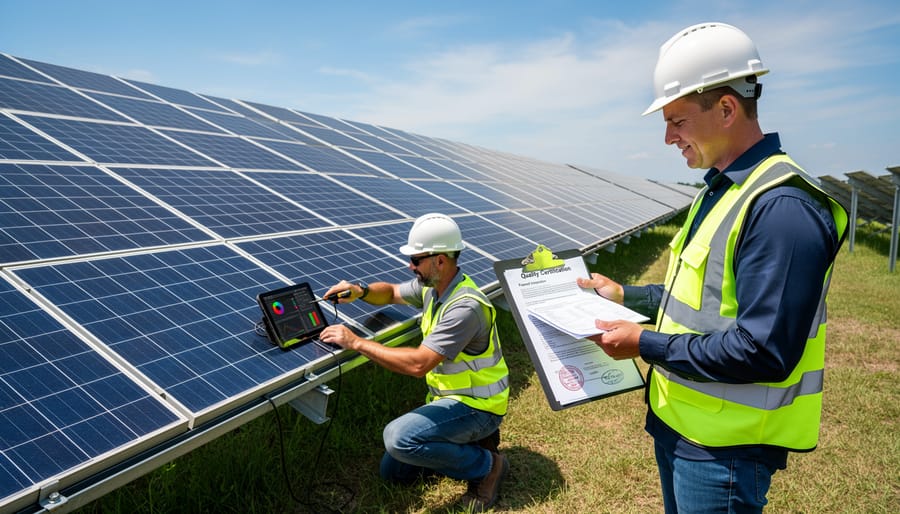
Starting a renewable energy certification program requires a structured approach that balances your professional commitments with your career development goals. Follow this systematic process to find and enroll in the right program for your needs.
Most quality programs offer flexible completion timelines that accommodate professional responsibilities. Programs like Dalhousie University’s Certificate in Sustainable Energy Technologies require 126 hours across three courses, allowing you to progress at a pace that works alongside full-time employment.
Before enrolling, confirm you meet basic requirements such as secondary school completion and professional English proficiency. Many programs prefer applicants with two to five years of industry experience, though this serves as guidance rather than a strict barrier. Your existing work in renewable energy provides valuable context that enriches the learning experience and helps you immediately apply new knowledge to current projects.
Online renewable energy certification programs represent more than credentials, they’re investments in both your career trajectory and the industry’s future. As the renewable energy sector expands across North America in 2026, professionals who pursue continuous learning position themselves as leaders capable of implementing cutting-edge technologies and sustainable practices that drive meaningful environmental impact.
The commitment to professional development through certification programs reflects the same dedication to quality that defines industry standards like ISO 9001:2015. Engineers gain technical depth to tackle complex installation challenges. Procurement managers develop expertise to evaluate emerging technologies and supplier capabilities. Sustainability officers acquire the knowledge to design comprehensive clean energy strategies that deliver measurable results.
Beyond individual advancement, your participation in these programs strengthens the entire renewable energy ecosystem. Each certified professional contributes to raising industry standards, improving project outcomes, and accelerating the transition to sustainable energy systems. The technical skills and specialized knowledge you gain enable you to specify better solutions, reduce implementation risks, and demonstrate credibility to stakeholders who increasingly demand proven expertise.
The renewable energy industry needs professionals who combine practical experience with current technical knowledge. Whether you’re exploring foundational programs or pursuing specialized credentials, the time you invest in certification directly supports your ability to deliver innovative, sustainable solutions. Your professional growth and the industry’s advancement toward a cleaner energy future are inseparable.