
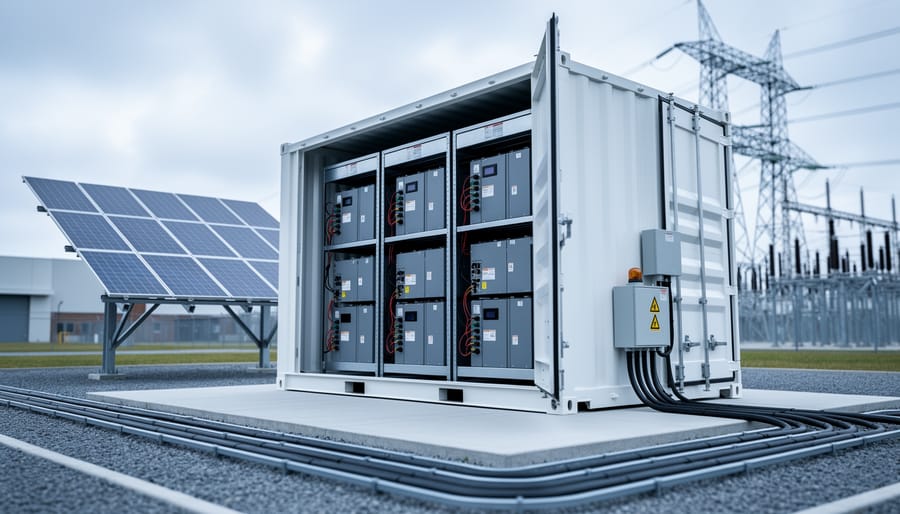
Energy storage solutions serve as the critical bridge between renewable energy generation and consistent, reliable power delivery, with battery energy storage systems (BESS) now anchoring grid stability, commercial solar installations, and electric vehicle infrastructure across North America. These systems capture excess energy during peak production periods and discharge it when demand rises or generation drops, solving the fundamental intermittency challenge that has long constrained wind and solar deployment. Modern lithium-ion configurations dominate the market, delivering energy densities between 150-250 Wh/kg and cycle lives exceeding 5,000 charge-discharge cycles under proper management.
The technology has matured rapidly. What began as niche grid applications has expanded into utility-scale projects storing hundreds of megawatt-hours, commercial microgrids balancing on-site solar arrays, and fast-charging stations supporting electric fleet operations. This evolution reflects both falling costs and proven performance. System prices have dropped by nearly 70% since 2015, while efficiency ratings consistently exceed 85% round-trip for quality installations.
Selecting the right energy storage solution demands understanding three interconnected factors: the specific application requirements, the technical capabilities of available battery chemistries, and the long-term sustainability profile of both the system and its supply chain. Engineers evaluating BESS options must balance initial capital outlay against lifecycle costs, assess thermal management needs for their climate zone, and verify component sourcing meets ISO 9001:2015 standards for quality assurance. The surge in clean energy funding has accelerated deployment timelines, making informed procurement decisions more urgent for organizations seeking to capitalize on federal incentives while ensuring system reliability over 10 to 20-year operational horizons.
Battery Energy Storage Solutions (BESS) represent a fundamental shift in how we manage electrical power, transforming intermittent renewable generation into dispatchable, grid-quality energy. At their core, these systems capture electricity during periods of surplus production or low demand, store it electrochemically in battery modules, and discharge it precisely when needed, whether that’s during evening peak hours, sudden supply disruptions, or grid frequency events.
Unlike traditional grid infrastructure that relies on constant fuel-fed generation to match real-time demand, BESS operates as a flexible buffer. The technology decouples electricity production from consumption, allowing solar arrays to contribute power long after sunset and wind farms to deliver stable output despite gusting conditions. This capability has made battery storage the cornerstone of modern renewable energy projects across North America.
A complete BESS installation comprises four integrated subsystems working in concert. Battery modules, typically lithium-ion cells arranged in racks or containers, provide the energy storage capacity measured in megawatt-hours. Power conversion systems, consisting of inverters and transformers, manage the bidirectional flow of electricity between DC battery storage and AC grid connection while maintaining power quality. Thermal management systems regulate operating temperatures through active cooling or heating, protecting battery chemistry and extending lifecycle. Control and monitoring systems orchestrate the entire operation, executing charge-discharge strategies, tracking state of charge, managing safety protocols, and communicating with grid operators or facility management platforms.
The fundamental value proposition for renewable energy applications centers on economics and reliability. BESS enables project developers to capture maximum value from their generation assets by shifting output to premium pricing periods, reducing curtailment losses, and accessing revenue streams from ancillary services. For facility managers and utilities, storage systems defer costly infrastructure upgrades, smooth demand profiles to reduce peak charges, and provide insurance against grid instability. Engineers evaluating these systems for 2026 projects should recognize that modern BESS technology has matured beyond experimental status into proven infrastructure with established performance metrics, standardized components, and quantifiable return profiles.
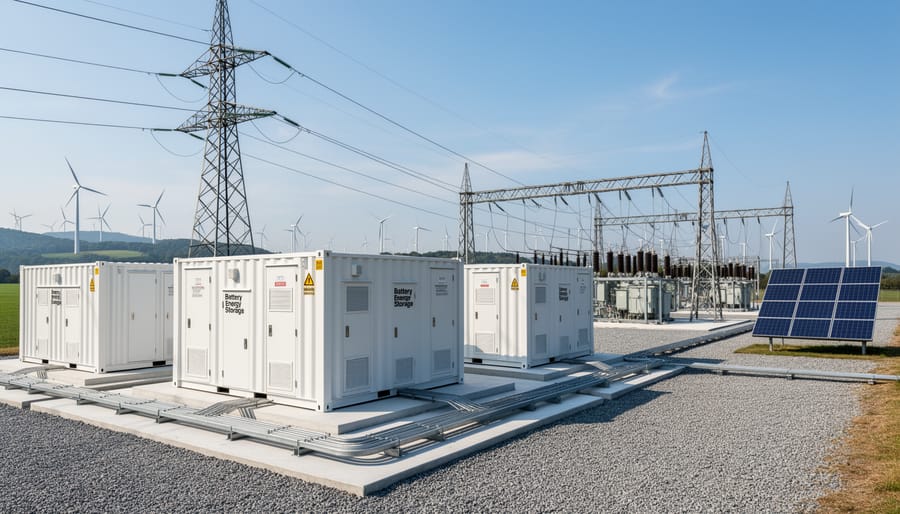
Lithium-ion battery technology dominates renewable energy storage today, but significant performance differences exist between chemistries. Each variant offers distinct trade-offs in energy density, cycle life, safety, and cost that directly impact project economics and operational longevity.
Nickel Manganese Cobalt (NMC) batteries deliver high energy density, making them ideal for space-constrained installations. They typically achieve 150-220 Wh/kg and offer 2,000-3,000 cycles at 80% depth of discharge. However, thermal management becomes critical as NMC chemistries are more susceptible to thermal runaway than alternatives.
Lithium Iron Phosphate (LFP) has emerged as the preferred chemistry for grid-scale solar and wind applications. While energy density is lower at 90-160 Wh/kg, LFP systems routinely deliver 4,000-6,000 cycles with superior thermal stability. The elimination of cobalt reduces supply chain risk and improves sustainability credentials. Most utility-scale projects in North America now specify LFP for these durability and safety advantages.
Nickel Cobalt Aluminum (NCA) batteries provide the highest energy density but at a cost premium. Limited primarily to specialized applications, they remain less common in grid-scale deployments due to thermal sensitivity concerns.
| Battery Chemistry | Energy Density | Cycle Life (80% DoD) | Best Applications |
|---|---|---|---|
| NMC | 150-220 Wh/kg | 2,000-3,000 cycles | Commercial C&I, space-constrained sites |
| LFP | 90-160 Wh/kg | 4,000-6,000 cycles | Utility-scale solar/wind, long-duration storage |
| NCA | 200-260 Wh/kg | 1,500-2,500 cycles | High-performance EV charging, premium applications |
| Sodium-Ion | 90-150 Wh/kg | 3,000-5,000 cycles | Stationary storage, cold climate deployments |
Emerging technologies promise further improvements. Sodium-ion batteries are entering commercial production with competitive cycle life and the advantage of abundant, geographically diverse raw materials. They perform better than lithium-ion in cold climates, maintaining capacity at temperatures below freezing without supplemental heating.
Solid-state batteries remain in pilot phases but offer substantially higher energy density and improved safety by replacing flammable liquid electrolytes with solid materials. Commercial availability for grid-scale applications is projected for the late 2020s, though early deployments may focus on high-value niches where performance justifies premium pricing.
While battery cells generate attention, the surrounding infrastructure determines whether an energy storage system operates safely and efficiently. Balance of plant (BoP) components transform raw battery capacity into a grid-ready asset capable of reliable, long-term performance.
Power conversion systems form the critical link between DC battery storage and AC grid requirements. Modern inverters not only convert power bidirectionally, charging from and discharging to the grid, but also provide reactive power support, voltage regulation, and fault ride-through capabilities that grid operators increasingly demand. Efficiency matters here: a 2-3% conversion loss compounded over thousands of cycles significantly impacts project economics.
Thermal management systems maintain battery cells within optimal operating ranges, typically 15-35°C for lithium-ion chemistries. Active cooling using HVAC units or liquid cooling loops prevents thermal runaway cascades while maximizing cycle life. In hot climates or high-power applications, inadequate thermal control can reduce battery lifespan by 30-40%. Engineers must size cooling capacity for worst-case ambient conditions plus internal heat generation during rapid charge-discharge cycles.
Fire suppression represents non-negotiable infrastructure for utility-scale installations. NFPA 855 requires early detection systems coupled with suppression technologies, water mist, aerosol, or inert gas, appropriate to the battery chemistry. Detection algorithms monitor voltage, temperature differentials, and off-gas signatures to identify thermal events before they escalate.
Energy management systems integrate these components through real-time monitoring and control. Modern platforms track individual cell voltages, predict maintenance needs using machine learning, and optimize dispatch strategies based on market signals. Remote diagnostics allow operators to address anomalies before they impact availability, critical for assets supporting grid reliability contracts.
Solar-plus-storage systems represent one of the most economically compelling renewable energy examples in North America’s commercial energy market. By pairing battery storage with solar arrays, facility managers shift daytime solar generation to evening peak hours when electricity rates are highest, capturing arbitrage opportunities that can reduce energy costs by 30-50% in time-of-use pricing regions.
The core value proposition extends beyond simple cost savings. BESS enables solar installations to provide dispatchable power rather than intermittent generation, transforming solar from a daytime-only resource into a firm capacity asset that utilities and grid operators value more highly. In California and other markets with duck curve challenges, this dispatchability commands premium compensation through capacity payments and demand response programs.
Grid dependency reduction represents another critical benefit for commercial and industrial facilities. A properly sized solar-plus-storage system can achieve 60-80% energy autonomy during typical operating hours, insulating operations from utility rate volatility and improving resilience during grid disturbances. For facilities in regions with aging transmission infrastructure or frequent curtailment events, this operational independence justifies the incremental storage investment through reduced downtime risk and improved power quality.
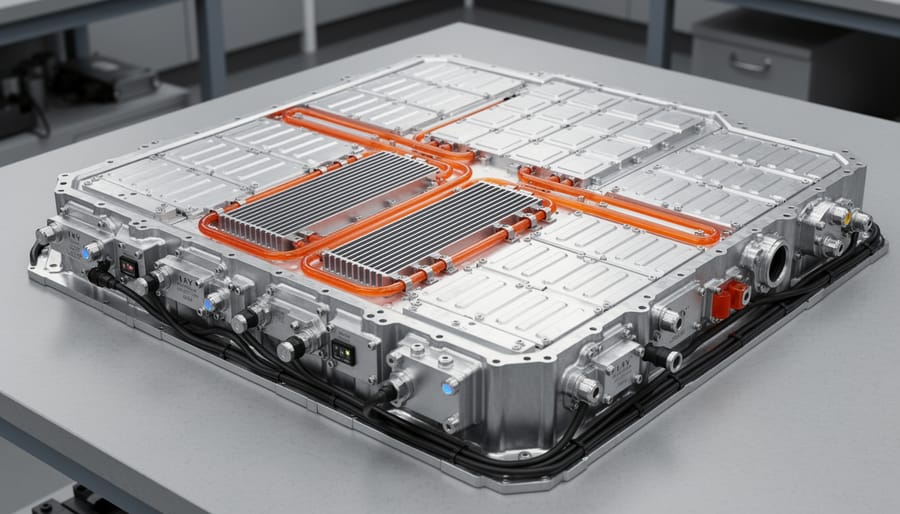
Wind power’s inherent variability creates grid management challenges that battery storage directly addresses. A 50 MW wind farm paired with a 20 MW / 40 MWh BESS can smooth output fluctuations across 15-minute dispatch intervals, reducing penalties for forecast deviations by 60-75% in markets like ERCOT and PJM. The storage system absorbs excess generation during high-wind periods and discharges when output drops, creating a more predictable power profile that grid operators value.
Beyond firming, BESS enables wind projects to capture ancillary service revenue streams. Frequency regulation contracts pay $8-15 per MW-hour in many North American markets, and a properly sized storage system can provide this service while simultaneously performing energy arbitrage. Wind-plus-storage projects achieve 15-20% higher capacity factors than standalone installations by shifting generation from low-price overnight hours to afternoon peak periods when wholesale rates triple.
The combination transforms wind from an intermittent resource into a dispatchable asset. Project developers now routinely size storage at 25-40% of nameplate wind capacity, balancing upfront capital costs against improved power purchase agreement terms and diversified revenue opportunities that reduce payback periods by two to three years.
Fast-charging stations create significant demand spikes that strain local grid infrastructure and trigger substantial utility demand charges. Battery energy storage systems address these challenges by decoupling charging load from grid draw, storing energy during off-peak periods and releasing it during high-demand charging events.
In typical DC fast-charging scenarios, a single vehicle can draw 150-350 kW for 20-30 minutes. Multiple simultaneous charging sessions compound this load. BESS installations sized between 500 kWh and 2 MWh can buffer these peaks, reducing grid connection requirements from 2 MW to 500 kW or less. This reduction lowers infrastructure costs and accelerates site deployment timelines.
Demand charge mitigation represents the most immediate economic benefit. Commercial rates often include charges of $15-25 per kW of peak monthly demand. Battery systems that clip peaks can reduce monthly demand charges by 40-60%, typically achieving payback within 4-6 years when combined with energy arbitrage.
For remote or constrained locations, storage enables charging deployment where grid capacity is limited or unavailable. Solar-plus-storage configurations support entirely off-grid charging stations, expanding EV infrastructure into underserved areas while reducing long-term operating costs through renewable energy self-consumption.
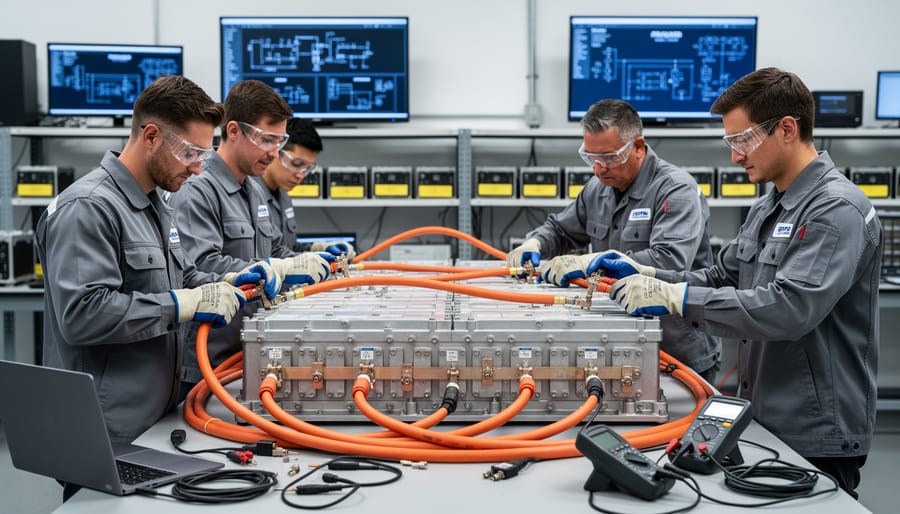
Battery energy storage systems depend on dozens of specialized components working in concert, and procurement decisions for these balance-of-system elements directly impact project performance, safety, and total cost of ownership. While battery modules often dominate budget discussions, the interconnecting infrastructure determines whether a BESS delivers nameplate performance for its expected 15 to 20-year lifespan.
High-voltage DC cables connect battery racks to inverters and must handle continuous current loads plus surge conditions during grid events. Cable specifications matter: undersized conductors create resistance losses and heat buildup that degrade efficiency, while poor insulation materials accelerate aging in high-temperature environments. Quality cables use tinned copper conductors with XLPE or EPR insulation rated for 90°C to 105°C operation, and they carry UL or ETL certifications for BESS applications. Connectors at battery terminals and inverter inputs require corrosion-resistant materials, proper torque specifications, and IP-rated enclosures to maintain contact integrity over thousands of charge-discharge cycles.
Thermal management components keep battery cells within their optimal 20°C to 30°C operating range, preventing capacity fade and thermal runaway scenarios. Liquid cooling systems circulate glycol mixtures through cold plates or immersion baths, requiring pumps, heat exchangers, and temperature sensors that must function reliably in outdoor installations. Air-cooled systems use ducting, fans, and filtration to manage airflow, with energy consumption that subtracts from round-trip efficiency. Component selection here involves trade-offs between capital cost, parasitic loads, and maintenance requirements.
Busbars, circuit breakers, and disconnects form the electrical backbone that routes power and provides protection. Busbars must handle rated current without excessive voltage drop, requiring proper sizing and connection hardware. Overcurrent protection devices need fast response times and high interrupt ratings to isolate faults before they propagate through battery strings.
Supply chain reliability becomes critical when projects operate on construction timelines with liquidated damages clauses. A trusted supply chain ensures that certified components arrive on schedule, with proper documentation and traceability. Top Solar’s ISO 9001:2015 certification reflects quality management systems that track component sourcing, testing, and delivery logistics. For BESS integrators, this means fewer delays from missing parts, substitution requests, or failed inspections when authority having jurisdiction reviews installations. Procurement managers reduce project risk by partnering with suppliers who maintain inventory depth, provide technical support during specification reviews, and deliver consistent quality across multiple project sites.
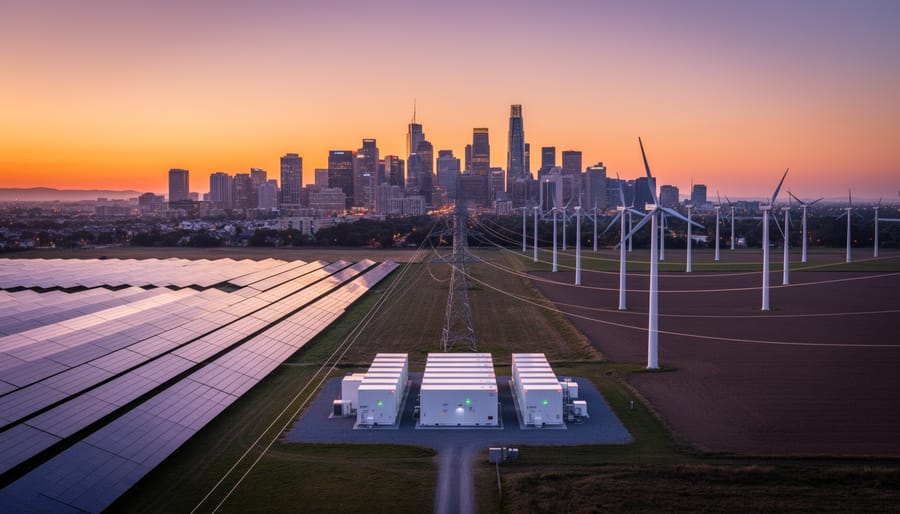
Selecting the right battery energy storage solution requires matching system specifications to your project’s operational profile and financial objectives. A methodical evaluation framework prevents over-sizing (which inflates capital costs) or under-sizing (which compromises performance and revenue potential).
Start with capacity sizing based on power and energy requirements. Power capacity (measured in kilowatts or megawatts) determines how much electricity the system can discharge at any moment, while energy capacity (kilowatt-hours or megawatt-hours) defines total stored energy. A 1 MW / 4 MWh system delivers one megawatt continuously for four hours. Your sizing depends on whether you’re buffering EV charging demand spikes, shifting solar generation to evening peaks, or providing grid frequency regulation.
Duration requirements directly impact system configuration and economics.
Longer duration systems cost more per kilowatt-hour installed but deliver different revenue streams. Projects focused on arbitrage (buying low, selling high) typically justify four-hour storage, while ancillary services may require only one or two hours.
Site constraints shape technology selection and system design. Available footprint influences whether you deploy containerized battery modules or purpose-built enclosures. Ambient temperature ranges affect thermal management requirements, LFP batteries tolerate heat better than NMC variants, reducing cooling costs in desert climates. Grid interconnection capacity determines maximum discharge rates, and utility upgrade costs can exceed battery system expenses if infrastructure reinforcement is needed.
Total cost of ownership extends beyond the initial purchase price. Evaluate lifecycle costs including installation, grid interconnection fees, maintenance contracts, insurance, and eventual decommissioning. Battery degradation rates vary by chemistry and operating profile; aggressive cycling shortens lifespan and reduces long-term value. Warranty terms matter, some manufacturers guarantee 80% capacity retention after ten years under defined cycling patterns, while others offer throughput-based warranties measured in megawatt-hours cycled.
Financial modeling should incorporate revenue opportunities specific to your market. Energy arbitrage, capacity payments, demand charge reduction, and ancillary services generate different cash flows with varying certainty. Some utilities offer dedicated storage incentives or enhanced feed-in tariffs for solar-plus-storage projects. Financing structures (ownership versus power purchase agreements) affect project viability and risk allocation.
For projects requiring ISO-certified components and documented supply chain traceability, prioritize suppliers with established quality management systems who can provide compliance documentation and technical support throughout the procurement process.
Battery energy storage installations operate under multiple layers of regulatory oversight designed to protect people, property, and the grid. UL 9540, the primary standard for energy storage systems, establishes safety requirements for complete BESS units, covering everything from electrical performance to fire propagation resistance. UL 1973 specifically addresses battery cells and modules, while UL 9540A provides the test methodology for evaluating thermal runaway fire propagation in battery systems. Together, these standards create a framework that helps engineers specify storage solutions with predictable safety characteristics.
International Electrotechnical Commission (IEC) standards complement UL requirements, particularly for projects involving global supply chains or international manufacturers. IEC 62619 covers safety requirements for lithium-ion batteries in industrial applications, while IEC 62933 addresses grid-connected energy storage system safety and performance. The National Fire Protection Association’s NFPA 855 sets installation requirements including spacing, ventilation, fire suppression, and emergency response protocols that directly impact site design and operational procedures.
Quality management extends beyond individual component certifications. ISO 9001:2015 certification demonstrates a supplier’s commitment to consistent quality control, documented processes, and continuous improvement across their operations. For procurement managers evaluating BESS components, this certification indicates that cables, connectors, and thermal management parts will meet specifications batch after batch, reducing the risk of field failures that compromise project timelines and safety.
The integration of certified components within a quality-managed supply chain creates defensible project documentation for insurers, utilities, and authorities having jurisdiction. This documentation trail becomes critical during commissioning, warranty claims, and incident investigations. When component suppliers maintain rigorous quality systems alongside product certifications, they enable the transparent crisis management protocols that large-scale energy storage projects require. Specifying certified components from ISO-certified suppliers reduces liability exposure while ensuring that safety systems perform as designed when thermal events or electrical faults occur.
Battery energy storage systems deliver measurable environmental benefits that extend well beyond their immediate function of storing electricity. A utility-scale BESS paired with solar or wind generation can displace fossil fuel peaker plants, which typically run on natural gas and activate during high-demand periods. By enabling stored renewable energy to meet peak loads instead, a 100 MWh storage system can eliminate thousands of metric tons of CO₂ annually, equivalent to removing hundreds of passenger vehicles from the road.
Storage also increases renewable energy penetration rates on the grid. Wind and solar installations often curtail generation when supply exceeds immediate demand, wasting clean energy that could otherwise displace fossil sources. BESS captures this surplus for use during low-generation periods, raising the effective capacity factor of renewable plants and reducing the grid’s reliance on backup natural gas generators. Studies from grid operators show that storage integration can increase renewable utilization by 15-25% in regions with high solar or wind penetration.
The lifecycle environmental footprint of battery systems has improved considerably as manufacturers adopt circular economy practices. Modern lithium-ion batteries contain recoverable materials, lithium, cobalt, nickel, and copper, that retain value after the battery reaches end-of-life. Advanced recycling processes now recover over 90% of these metals, reducing the need for virgin mining and lowering the embedded carbon of new battery production. Several North American battery manufacturers have established take-back programs and recycling partnerships to close the material loop.
Thermal runaway risks and fire safety concerns have driven the industry toward less toxic chemistries. Lithium iron phosphate (LFP) batteries, which contain no cobalt and pose lower thermal hazard, are gaining market share in stationary storage applications. When sourced through ISO 9001:2015-certified supply chains, these components meet rigorous quality standards that extend operational life and reduce premature replacement, further minimizing environmental impact. Properly managed BESS projects contribute to grid decarbonization while supporting a more sustainable materials economy in the renewable energy sector.
Battery energy storage projects inevitably raise practical questions from procurement teams and project engineers navigating their first deployments. Understanding performance expectations, maintenance protocols, and risk mitigation strategies helps organizations make confident investment decisions.
Lithium-ion systems typically deliver 10-15 years of operational life or 3,000-6,000 cycles before reaching 80% of original capacity, depending on chemistry, depth of discharge, and thermal management. LFP batteries generally outlast NMC variants in cycling-intensive applications.
Modern BESS installations require minimal hands-on maintenance, typically limited to quarterly inspections, annual thermal system checks, and software updates. Most systems include remote monitoring that alerts operators to performance anomalies before they become critical issues.
NFPA 855-compliant systems incorporate thermal runaway detection, automatic suppression systems (often aerosol or water mist), explosion venting, and compartmentalization to contain incidents. Third-party testing and UL 9540A certification validate these safety mechanisms.
Interconnection timelines vary by utility and project size, ranging from 6-18 months for distribution-connected systems. Fast-track processes exist for smaller installations, while transmission-level projects face more complex study requirements and longer queues.
Warranty structures deserve careful attention during procurement. Most manufacturers offer 10-year warranties with guaranteed capacity retention thresholds, often 70-80% of nameplate capacity at end of term. Performance guarantees typically specify throughput limits measured in megawatt-hours rather than calendar years alone, since cycling intensity determines degradation more than age. Clarify what triggers warranty claims, whether augmentation capacity is included to maintain output levels, and how warranty terms align with project financing requirements.
Component quality directly impacts total cost of ownership. Systems built with ISO 9001:2015-certified components and rigorous integration testing demonstrate lower failure rates and more predictable performance curves than lowest-bid alternatives. Budget for monitoring systems that track cell-level health metrics, enabling proactive maintenance rather than reactive repairs that compound downtime costs.
Battery energy storage solutions have moved from experimental technology to essential infrastructure in North America’s renewable energy landscape. As solar and wind installations expand across the continent, BESS systems provide the flexibility and reliability that make large-scale renewable deployment economically viable. The technology enables utilities, project developers, and industrial facilities to capture clean energy when it’s abundant and deploy it precisely when needed, transforming intermittent generation into dispatchable power.
The coming years will bring continued advancement in battery chemistries, longer-duration storage options, and more sophisticated control systems. Projects that incorporate quality components and rigorous engineering standards today will deliver reliable performance throughout their 15- to 20-year operational lifespans. That’s where supply chain discipline matters: every cable connection, thermal interface, and electrical component contributes to system uptime and safety.
Top Solar supports this infrastructure build-out by providing ISO 9001:2015-certified components that meet the demanding requirements of utility-scale and commercial BESS installations. Our focus extends beyond product supply to include technical support and logistics coordination that help procurement teams execute complex projects on schedule. We recognize that battery storage represents more than a technology investment, it’s a commitment to reducing carbon emissions and building resilient energy systems.
For engineers and decision-makers evaluating storage solutions in 2026, the path forward combines proven technology with careful component selection and a long-term view of sustainability impact. The renewable energy transition depends on storage infrastructure that performs reliably, year after year.