
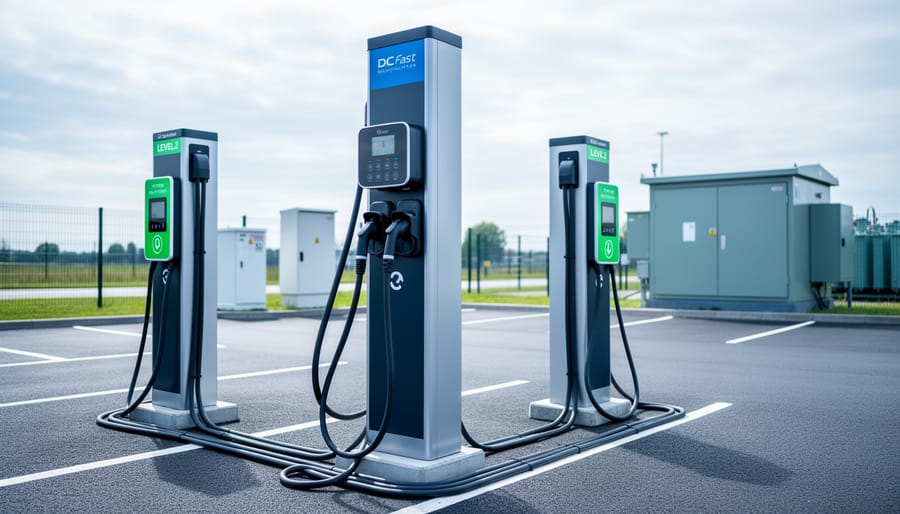
Electric vehicle charging infrastructure expansion requires a coordinated deployment of Level 2 and DC fast charging stations, robust electrical service upgrades, and strategic site selection to meet the surging demand from fleet electrification and consumer adoption. Success hinges on three interconnected elements: adequate grid capacity at chosen locations, reliable supply chains for charging hardware and electrical components, and compliance with evolving safety and interoperability standards.
The charging network buildout accelerating across North America in 2026 represents one of the most capital-intensive infrastructure projects of the renewable energy transition. Procurement managers and sustainability officers face immediate decisions about equipment specifications, site electrical capacity, and vendor partnerships that will determine project timelines and long-term operational costs. Unlike traditional fueling infrastructure, EV charging stations demand significant electrical infrastructure investment, often requiring service panel upgrades from 200-amp to 400-amp or higher, dedicated transformers for DC fast charging installations, and careful load management systems to prevent grid strain during peak usage.
The technical requirements extend beyond the charging units themselves. Site hosts must evaluate conduit pathways, trenching costs, utility interconnection fees, and ongoing maintenance protocols. Fleet operators converting to electric vehicles need coordinated installations that balance charging speed with electrical demand charges, while public charging networks prioritize locations that maximize utilization without overloading local distribution infrastructure.
Supply chain reliability has emerged as a critical factor. Component shortages, extended lead times for electrical switchgear, and quality variations among charging station manufacturers directly impact project completion dates. ISO 9001:2015 certified suppliers provide the quality assurance and delivery consistency that infrastructure projects require, particularly for large-scale deployments where equipment failures create costly downtime and reputational risks.
This technical and logistical complexity demands a clear understanding of both current infrastructure trends and the specific components that enable successful deployment.
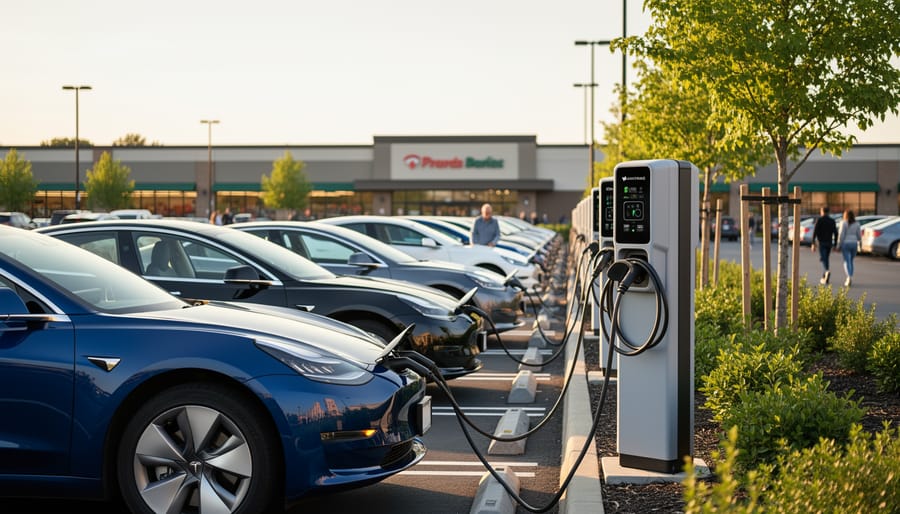
North America’s EV charging infrastructure is experiencing unprecedented growth, driven by federal mandates, private investment, and the accelerating transition to electric mobility. The landscape has shifted dramatically from scattered pilot projects to systematic network buildouts that are beginning to address range anxiety and enable longer-distance EV travel.
The United States alone saw public charging port installations increase by more than 40% between 2024 and early 2026, with fast-charging stations accounting for the majority of new deployments. Major interstate corridors now feature charging stations at intervals that make cross-country electric travel feasible, while metropolitan areas are witnessing density improvements that support daily EV use without home charging access. Canada has followed a similar trajectory, with provincial programs accelerating station deployment along the Trans-Canada Highway and within major urban centers.
Despite this progress, significant gaps persist. Rural areas continue to lag far behind urban centers in charging availability, creating coverage deserts that limit EV adoption in less densely populated regions. Suburban communities face different challenges, while station counts are growing, the density remains insufficient to support the rapid increase in EV ownership, leading to wait times and utilization bottlenecks at existing facilities.
The disparity between fast-charging availability and Level 2 charging infrastructure also presents planning challenges. While DC fast chargers enable long-distance travel, the everyday charging needs of fleet vehicles and commuters often require different solutions with distinct component specifications and electrical infrastructure requirements.
This expansion momentum creates urgent demands throughout the supply chain. Every new charging station requires high-quality cables, connectors, weatherproof enclosures, and power distribution components that meet rigorous safety and durability standards, components that specialized suppliers must deliver at unprecedented scale and speed.
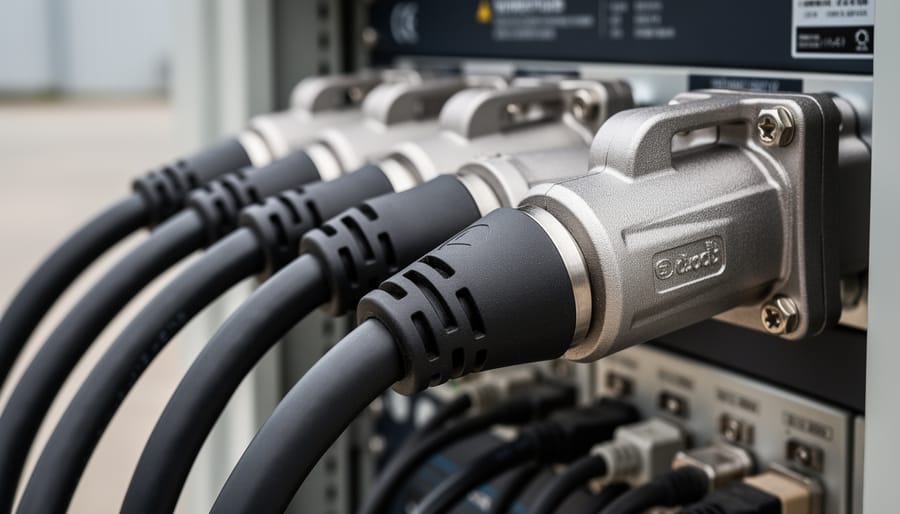
Commercial EV charging infrastructure demands cable systems engineered for continuous high-power delivery under harsh conditions. Level 2 charging typically requires cables rated for 240V AC at 40-80 amps, while DC fast charging pushes systems to 400-1000V DC with current loads exceeding 350 amps. These specifications aren’t theoretical, they determine whether a charging station operates reliably for a decade or fails within months.
Voltage ratings must include safety margins. A 1000V-rated cable for 800V charging provides critical headroom for voltage spikes and temperature fluctuations. Current capacity ties directly to conductor gauge and insulation material. Undersized cables generate excessive heat, accelerating insulation breakdown and creating fire hazards. Commercial deployments require cables meeting UL 2251 or equivalent standards, with copper conductors sized appropriately for sustained amperage without voltage drop exceeding 3% over cable length.
| Specification | Level 2 Charging | DC Fast Charging |
|---|---|---|
| Voltage Rating | 240V AC | 400-1000V DC |
| Current Capacity | 40-80A | 200-500A |
| Typical Conductor Size | 6-4 AWG | 4/0-350 MCM |
| Cable Flexibility Rating | Standard | High-flex required |
Durability standards extend beyond electrical specifications. Cables endure constant flexing as drivers plug and unplug vehicles, UV exposure in outdoor installations, and temperature swings from -40°F to 140°F across North American markets. TPE or TPU jacketing resists cracking better than PVC in extreme cold. Abrasion resistance matters for ground-level installations where cables contact pavement.
Cable management solutions prevent premature failures. Retractable reels reduce trip hazards and minimize ground contact. Strain relief at connection points prevents conductor fatigue. Proper routing and support systems distribute mechanical stress, extending service life from 3-5 years to 10+ years in commercial applications. Quality cable management isn’t cosmetic, it’s fundamental to infrastructure longevity and return on investment.
The connector landscape in North America is undergoing significant consolidation. While CHAdeMO connectors served early EV adopters, the Combined Charging System (CCS1) emerged as the dominant standard for DC fast charging across most manufacturers. However, Tesla’s announcement that its North American Charging Standard (NACS) would become accessible to other automakers has reshaped infrastructure planning. By 2026, most major manufacturers have committed to adopting NACS connectors, creating a dual-standard environment during this transition period.
This shift places new demands on component quality. Connectors must withstand thousands of insertion cycles, extreme temperatures, and exposure to moisture while maintaining electrical integrity at high voltages and currents. Poor-quality connectors lead to connection failures, increased resistance that generates heat, and safety risks that can sideline entire charging stations.
Infrastructure developers face a critical choice: deploy stations with both CCS and NACS connectors to serve all vehicles, or focus on future-forward NACS installations while serving current CCS vehicles through adapters. Either approach requires connectors manufactured to rigorous standards, with proper sealing, robust contact materials, and certifications that verify performance under real-world conditions. Substandard components might cost less initially but generate maintenance expenses and user frustration that far exceed any upfront savings.
North American charging infrastructure must withstand temperature extremes ranging from -40°F in Canadian winters to 120°F+ in southwestern desert installations. Component selection directly determines whether stations remain operational through these conditions or require costly repairs and downtime.
Cable insulation materials rated for extended temperature ranges prevent brittleness in cold and degradation in heat. UV-resistant housings protect connectors from sun exposure that would otherwise cause cracking within two years. Sealed enclosures with IP65 or higher ratings block moisture, dust, and road salt, common failure points in coastal and northern installations.
Quality certifications like UL and CSA verify that components meet environmental stress testing standards. ISO 9001:2015-certified suppliers maintain consistency across production runs, ensuring each cable assembly performs identically regardless of climate zone. Choosing certified, climate-appropriate components reduces maintenance frequency by 60-70% compared to standard-grade alternatives, protecting both uptime and long-term infrastructure investments.
The explosive demand for EV charging infrastructure in 2026 has exposed significant vulnerabilities in traditional procurement approaches. Infrastructure developers frequently encounter component shortages, extended lead times stretching beyond six months, and quality inconsistencies that can derail project timelines and balloon costs.
The most persistent challenge centers on high-voltage cables and connector assemblies. Generic suppliers often lack adequate inventory depth for specialized charging applications, forcing developers to accept substitutes or face delays. This problem intensifies during peak construction seasons when multiple large-scale projects compete for the same component pool. The complexity multiplies when projects require specific certifications or must meet utility interconnection standards that generic components don’t address.
Lead time unpredictability creates cascading project delays. When a single component arrives late, it can idle installation crews, push commissioning dates, and trigger penalty clauses in construction contracts. The financial impact extends beyond direct costs, delayed charging stations mean lost revenue opportunities and eroded stakeholder confidence in expansion plans.
Specialized suppliers distinguish themselves by maintaining substantial inventory of certified components specifically engineered for charging infrastructure. Rather than treating cables and connectors as commodity items, these partners understand the technical nuances of NFPA 70 compliance, UL listing requirements, and environmental resilience specifications. Their engineering support helps developers specify the right components initially, eliminating costly mid-project redesigns.
Proactive inventory management transforms procurement from reactive to strategic. Suppliers who forecast demand patterns and pre-position stock based on regional development trends can compress lead times from months to days. This capability proves especially valuable when emergency replacements become necessary or when projects accelerate unexpectedly due to funding availability.
Logistics expertise separates adequate suppliers from exceptional ones. Coordinating component delivery to match construction schedules, managing phased shipments for multi-site deployments, and providing just-in-time delivery that minimizes on-site storage requirements all contribute to smoother project execution. These operational capabilities matter as much as component quality.
The most valuable supplier relationships extend beyond transactions to true partnerships. Suppliers offering technical consultation, helping navigate evolving standards, and providing backup component sourcing through a trusted supply chain network become strategic assets rather than vendors. This partnership approach proves especially critical when infrastructure developers face unexpected challenges requiring rapid problem-solving and energy crisis management capabilities.
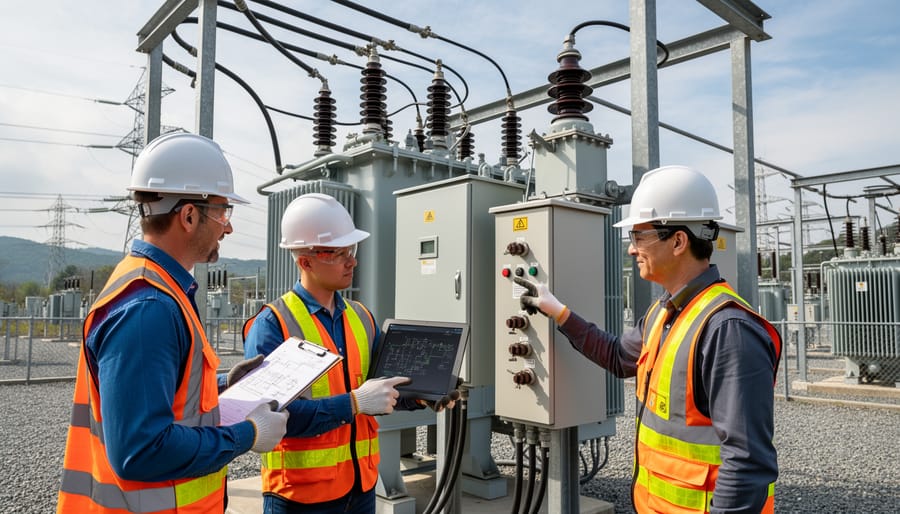
EV charging stations don’t operate in isolation, they demand substantial electrical infrastructure upgrades that many sites weren’t designed to handle. A typical Level 2 charger draws 7-19 kW, while DC fast chargers can pull 50-350 kW, comparable to powering dozens of homes simultaneously. Before installing charging equipment, site assessments must evaluate existing transformer capacity, panel ratings, and circuit availability to determine whether the current electrical service can support the additional load or if utility upgrades are necessary.
Transformer upgrades often become the first major hurdle. Commercial properties may need to increase transformer capacity from 200-400 amps to 800-1200 amps for multi-charger installations, requiring coordination with local utilities months in advance. Panel upgrades follow closely behind, existing electrical panels rarely have sufficient breaker space or capacity for multiple charging circuits. Installing dedicated subpanels with appropriate ratings for EV loads, along with proper cable runs and conduit systems, ensures safe power delivery while maintaining capacity for future expansion.
Power management systems have emerged as cost-effective alternatives to full electrical service upgrades. These intelligent systems dynamically allocate available power across multiple charging stations, preventing overloads by adjusting charging speeds based on real-time demand. Load management becomes particularly valuable for sites constrained by utility service limits or those seeking to avoid expensive infrastructure overhauls. The systems monitor total building consumption and can throttle charging during peak hours or when other high-draw equipment operates.
Integrating charging infrastructure with on-site solar installations creates synergies that reduce grid strain and operational costs. Solar arrays paired with battery storage can supply charging stations during peak demand periods, when utility rates climb highest, while storing excess generation for later use. This coordination between renewable energy examples and EV infrastructure requires careful system design, including appropriately rated cables, inverters, and switchgear, to handle bidirectional power flow and ensure reliable operation.
Sites must also plan for resilience and redundancy. Critical charging locations should incorporate backup power systems or maintain grid connectivity through redundant service feeds. Quality cable selection and proper installation protect against voltage drops, overheating, and failure scenarios that could disable entire charging networks. Having established emergency response protocols for electrical issues, along with accessible component inventories for rapid repairs, minimizes downtime and maintains customer confidence in charging availability.

Strategic infrastructure planning delivers environmental benefits that extend far beyond the immediate function of charging electric vehicles. When developers prioritize quality components and thoughtful system design from the outset, they create charging networks that support decarbonization goals while minimizing resource consumption throughout the infrastructure lifecycle.
Durable, certified components reduce waste by extending operational lifespan. A charging station built with weather-resistant cables, corrosion-proof connectors, and properly rated electrical components can operate reliably for 15-20 years with minimal replacements. This stands in sharp contrast to installations using lower-grade materials that require frequent repairs and component swaps, each generating scrap materials and demanding new manufacturing resources. The environmental cost of premature failure compounds over time: transportation emissions from service calls, packaging waste from replacement parts, and the embodied carbon in newly manufactured components all add up when infrastructure fails prematurely.
Efficient cable management and power distribution systems also drive sustainability gains. Well-designed cable runs minimize copper usage while maintaining performance, and integrated power management systems prevent energy waste from idle draw and inefficient conversion. These design choices reduce the carbon footprint of each charging session while improving overall grid efficiency.
Integration with renewable energy sources multiplies these benefits. Charging infrastructure planned alongside solar canopies or designed for grid-tied renewable power creates true zero-emission refueling when combined with battery storage. This strategic pairing accelerates decarbonization by ensuring EVs charge from clean sources rather than fossil fuel-dependent grids.
Component certification matters here. ISO-certified manufacturers maintain quality control processes that reduce defect rates and ensure consistency, translating directly into fewer field failures and less waste. For procurement managers focused on sustainability targets, selecting certified suppliers isn’t just about compliance, it’s about building infrastructure that performs its environmental mission for decades rather than years.
As EV infrastructure projects accelerate in 2026, procurement managers face mounting pressure to balance rapid deployment timelines with long-term reliability. The suppliers and components you select now will determine whether your charging network operates seamlessly for years or becomes a maintenance liability. Smart procurement decisions require moving beyond price-per-unit comparisons to evaluate the total value a supplier brings to complex infrastructure builds.
Start by establishing non-negotiable baseline requirements. Certification should top your list, ISO 9001:2015 certification signals quality management systems that translate to consistent product performance. UL or CSA listings for electrical components aren’t optional; they’re essential for code compliance and insurance coverage. Request documentation upfront rather than discovering gaps during installation.
When evaluating potential suppliers for your infrastructure expansion, follow this systematic approach:
Engineering support separates adequate suppliers from genuine partners. Can they help you right-size cable gauges for your specific power requirements? Will they review site plans to identify potential issues before installation? Suppliers with in-house technical expertise reduce costly field modifications and accelerate project timelines. Ask for examples of how they’ve solved complex installation challenges for similar deployments.
Logistics capabilities matter more in 2026’s compressed timelines. A supplier maintaining regional inventory can respond to urgent needs or project scope changes without derailing your schedule. Cross-border projects require suppliers who understand customs processes and can navigate regulatory requirements efficiently. Lead times that seemed acceptable for 2024 projects now present unacceptable delays.
Finally, think beyond the immediate project. The relationship you establish with component suppliers will extend through expansions, upgrades, and maintenance cycles. Suppliers who invest in understanding your long-term infrastructure roadmap become strategic assets rather than transactional vendors.
The success of EV infrastructure expansion depends on two fundamental pillars: the quality of components installed and the reliability of the supply chains delivering them. As charging networks scale to meet 2026 demand, every cable, connector, and power distribution component becomes a potential point of failure or a foundation for long-term performance. Projects that prioritize certified, durable components from the outset avoid costly retrofits and maximize uptime across their networks.
Top Solar supports this critical transition by providing the comprehensive infrastructure solutions that charging network operators need. Our cable assemblies, connectors, and accessories meet rigorous quality standards, backed by ISO 9001:2015 certification that ensures consistency across every order. We understand that infrastructure expansion requires more than products on a shelf. It demands engineering expertise, responsive logistics, and a partner who recognizes the urgency of decarbonization goals.
Whether you are deploying urban fast-charging hubs or extending networks into underserved regions, the components you select today determine reliability for years ahead. Our focus on sustainability extends beyond rhetoric. We supply infrastructure built to last, reducing waste and supporting the renewable energy transition through every project we touch.
The opportunity to build robust, future-ready charging infrastructure exists right now. Choose suppliers who demonstrate both technical capability and commitment to the long-term success of your network.