
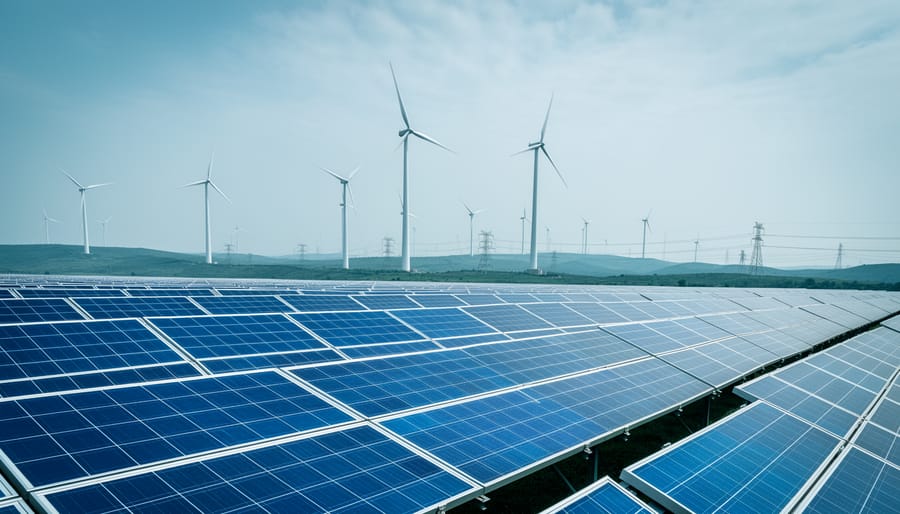
India has officially crossed 300 GW of non-fossil fuel electricity generation capacity as of July 31, 2026, marking a critical waypoint on its path to achieving 500 GW by 2030. This milestone, confirmed by the Ministry of New and Renewable Energy, positions India as one of the fastest-growing renewable energy markets globally and creates significant opportunities for North American renewable energy professionals engaged in supply chain partnerships, technology transfer, and quality-assured procurement.
The achievement represents 60% progress toward the 2030 target with just over three years remaining, requiring an acceleration of deployment to approximately 50 GW annually. For procurement managers and sustainability officers, this trajectory signals robust demand for ISO 9001:2015-certified solar modules, wind turbines, and balance-of-system components that meet international quality standards. The scale of India’s buildout will influence global manufacturing capacity, pricing dynamics, and technology innovation across the renewable sector.
Understanding this milestone matters because India’s renewable energy expansion directly impacts North American supply chains, creates precedents for large-scale grid integration solutions, and demonstrates how emerging economies can achieve ambitious decarbonization targets. The next 200 GW will test project execution capabilities, grid infrastructure resilience, and the renewable energy industry’s ability to maintain quality standards while meeting aggressive timelines.
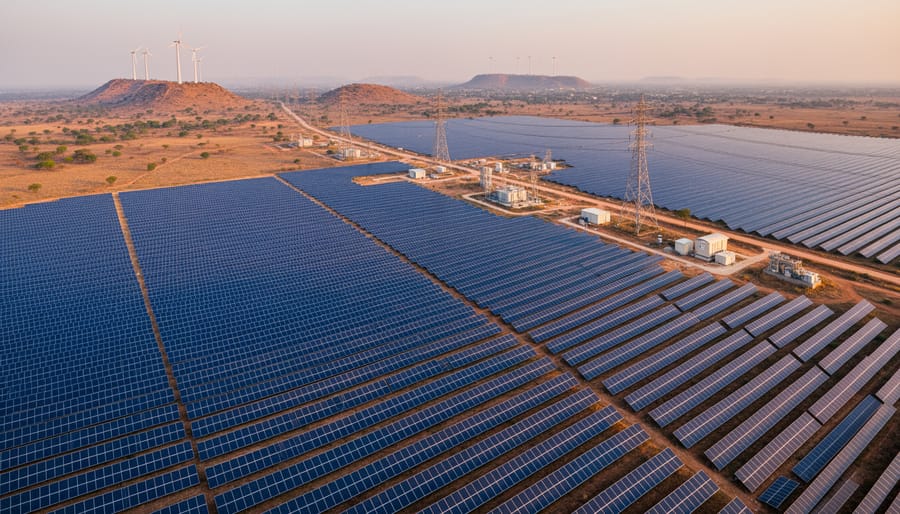
On July 31, 2026, India’s Ministry of New and Renewable Energy announced that the country had crossed 300 GW on July 31, 2026 of non-fossil fuel-based installed electricity generation capacity. This milestone represents a critical waypoint on the path to India’s ambitious 500 GW target set for 2030, placing the country at roughly 60 percent of its intended capacity with just over three years remaining to close the gap. The 300 GW figure encompasses renewable energy sources including solar, wind, biomass, and hydroelectric installations, along with nuclear power, which together comprise what the Ministry defines as non-fossil fuel-based installed capacity definition.
This achievement reflects more than a decade of sustained investment and deployment, accelerating sharply in recent years as both utility-scale projects and distributed generation systems came online across multiple states. For North American renewable energy suppliers, the pace at which India reached this threshold signals robust ongoing demand for components, infrastructure, and technical expertise through the end of the decade.
The 300 GW milestone reflects unprecedented growth in India’s utility-scale solar and wind installations, with solar photovoltaic projects accounting for approximately 60% of the non-fossil fuel capacity and onshore wind farms contributing another significant portion. Between 2023 and mid-2026, India deployed an average of 25-30 GW annually, with solar farms in Rajasthan, Gujarat, and Karnataka leading installations alongside major wind projects in Tamil Nadu and Maharashtra. This rapid expansion required coordinated infrastructure development across multiple technology platforms.
Several factors accelerated these capacity additions:
Grid integration has emerged as a critical challenge at this scale. Managing intermittent solar and wind generation across diverse climate zones requires sophisticated forecasting systems, enhanced transmission corridors, and flexible dispatch capabilities. The rapid deployment stressed existing grid infrastructure, particularly in regions where renewable capacity now exceeds local demand during peak generation hours. Utilities invested heavily in transmission upgrades and battery energy storage systems to maintain grid stability, while implementing curtailment protocols during excess generation periods.
Regional distribution patterns reflect resource availability and land use policies. Western states dominated solar installations due to high irradiation levels and available land, while coastal and southern regions captured superior wind resources. The technology mix evolved toward larger unit sizes, solar farms exceeding 100 MW and wind turbines rated at 3-4 MW became standard. This shift improved project economics but demanded more robust electrical infrastructure, including specialized voltage cable types capable of handling high-capacity transmission from remote generation sites to load centers.
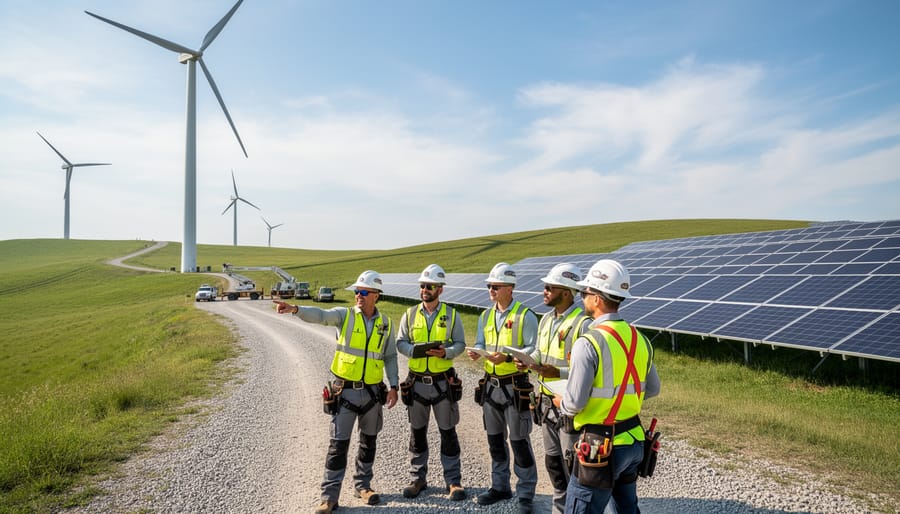
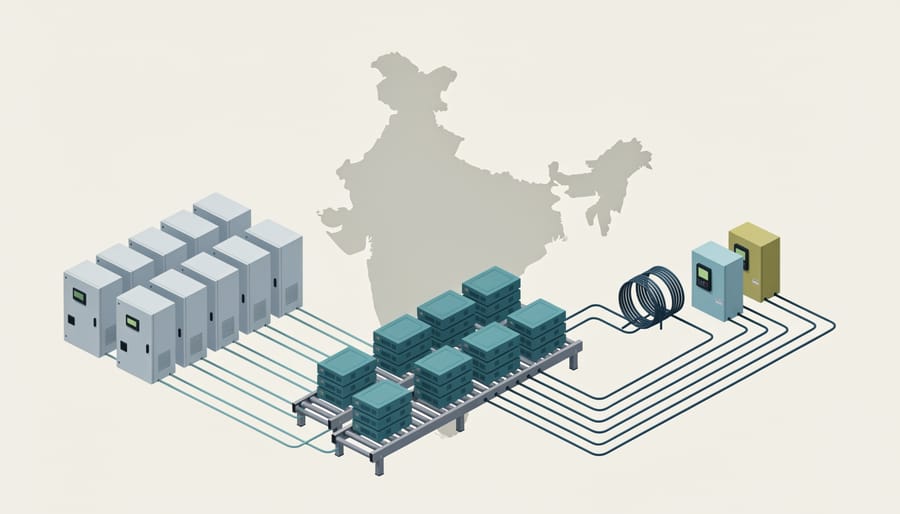
The expansion to 300 GW has been underpinned by a massive scale-up in renewable energy manufacturing capacity, both within India and through international partnerships. This manufacturing surge addresses the enormous demand for solar modules, inverters, and balance-of-system components required to sustain India’s installation pace toward the 2030 target.
Domestic solar module production in India has grown substantially, driven by production-linked incentive schemes and import duty structures designed to build self-reliance. Major manufacturing hubs have emerged across several states, producing polysilicon wafers, cells, and finished modules to supply the gigawatt-scale projects being commissioned. However, domestic capacity alone cannot meet the full demand, creating sustained opportunities for international suppliers who can deliver at competitive prices while meeting quality standards.
Inverter manufacturing has similarly expanded, with both domestic producers and international companies establishing facilities to serve the Indian market. The sheer volume of utility-scale solar and wind projects requires a steady supply of string inverters, central inverters, and increasingly, hybrid inverters for installations paired with battery storage.
Critical balance-of-system components represent a particularly significant opportunity for North American suppliers. High-quality cables, connectors, mounting structures, and monitoring systems are essential for project reliability and longevity. As India’s renewable sector matures, developers increasingly prioritize components that meet international quality certifications, including ISO 9001:2015 standards, to ensure long-term performance and minimize operational risks.
The supply chain requirements for reaching 500 GW by 2030 will intensify further, with annual installation rates needing to average over 40 GW. This creates a substantial and sustained market for manufacturers and distributors who can deliver certified, reliable components at scale.
India’s rapid renewable energy expansion rests on a robust policy architecture that has transformed the country into one of the world’s most attractive clean energy markets. The government’s central commitment, the official 500 GW target by 2030, has been reinforced through a suite of financial incentives, streamlined permitting processes, and strategic tender mechanisms administered by the Ministry of New and Renewable Energy.
The Production-Linked Incentive scheme for solar manufacturing has catalyzed domestic module and cell production, reducing import dependence and creating opportunities for integrated supply chains. Simultaneously, the government has introduced viability gap funding for large-scale projects in regions with grid constraints, making previously uneconomical installations financially viable. These instruments complement competitive reverse auction mechanisms that have driven down tariffs while ensuring bankability for developers and lenders.
Regulatory reforms have addressed critical bottlenecks that once slowed project execution. Amendments to land acquisition procedures, expedited environmental clearances for renewable projects, and standardized power purchase agreement templates have collectively shortened development timelines. The introduction of a Must-Run status for renewable energy plants ensures grid priority, while inter-state transmission system waivers reduce the cost burden on developers moving power from resource-rich to demand-heavy regions.
For international suppliers and component manufacturers, this policy environment signals predictable, long-term demand. The Ministry of New and Renewable Energy has also established quality standards and certification requirements that align with international benchmarks, creating pathways for suppliers meeting rigorous specifications. As India scales from 300 GW toward 500 GW, these frameworks provide the structural foundation for sustained growth and cross-border collaboration in the renewable energy supply chain.
India’s achievement of 300 GW sends a clear signal to the global renewable energy sector: one of the world’s largest emerging markets has proven it can execute utility-scale clean energy deployment at pace and volume. For equipment manufacturers, component suppliers, and logistics providers worldwide, this milestone represents a sustained multi-year demand curve that extends through the end of the decade and likely beyond.
The immediate implication is sustained pressure on global supply chains for solar modules, wind turbine components, inverters, transformers, high-voltage cables, and mounting systems. India’s trajectory toward 500 GW by 2030 requires adding roughly 50 GW of new capacity annually, a rate that absorbs significant manufacturing output and tests the resilience of international sourcing networks. North American renewable energy professionals managing procurement for domestic projects now face a market where a substantial share of global component production flows to India, influencing lead times, pricing dynamics, and availability across all regions.
The scale of India’s build-out also accelerates innovation in grid infrastructure, energy storage integration, and electric vehicle charging networks, technologies that mature faster when deployed at this volume. Solutions proven in India’s challenging grid conditions often translate well to other emerging markets and provide valuable data for North American installations facing similar integration challenges.
For companies focused on cables, EV infrastructure, and supporting components, India’s growth validates the business case for expanding production capacity and investing in a trusted supply chain capable of meeting both domestic North American demand and export opportunities. The 300 GW milestone confirms that renewable energy procurement at this scale is no longer theoretical, it’s operational reality.
India must add approximately 50 GW of non-fossil fuel capacity annually to meet its 2030 target, representing a 66 percent increase in installation pace compared to the rate that delivered the first 300 GW. This compressed timeline demands coordination across manufacturing, grid infrastructure, financing, and regulatory frameworks operating in parallel rather than sequence.
Grid infrastructure presents the most immediate challenge. Transmission capacity must expand simultaneously with generation assets to avoid curtailment losses that have already plagued some high-renewable regions. Substations, high-voltage corridors, and grid-balancing infrastructure require lead times measured in years, not months. Energy storage deployment must accelerate dramatically, forecasts suggest India needs at least 40 GW of battery storage capacity by 2030 to manage the intermittency of solar and wind at scale.
Supply chain readiness remains uneven. While domestic solar module manufacturing has matured, critical components such as inverters, transformers, specialized cables, and mounting structures still depend heavily on imports. North American renewable energy professionals should monitor India’s domestic content requirements, which influence procurement patterns and create potential openings for certified suppliers meeting quality standards. Logistics bottlenecks at ports and inland transport constraints can delay project timelines, making robust emergency response planning and supply chain resilience essential.
Land acquisition, environmental clearances, and financing access pose ongoing risks. Projects in remote areas face infrastructure gaps that increase per-megawatt costs, while securing long-term power purchase agreements at bankable tariffs remains competitive. The sector’s ability to maintain installation momentum through these constraints will determine whether the 500 GW target shifts from ambitious to achievable.
India’s renewable energy expansion raises important questions for industry professionals monitoring global market developments and supply chain opportunities. The 300 GW milestone and the path to 500 GW have specific implications for equipment suppliers, certification standards, and international trade relationships.
The 300 GW capacity encompasses solar, wind, hydro, biomass, and other renewable sources, but excludes coal, gas, and oil-based generation. This broad definition aligns with India’s climate commitments while allowing for diverse technology deployment across different regions.
India needs to add approximately 50 GW annually between now and 2030 to reach the target. While ambitious, recent acceleration suggests feasibility if supply chains scale accordingly and grid infrastructure keeps pace with generation capacity.
Solar photovoltaic installations currently dominate the capacity additions, with utility-scale solar projects leading growth, though wind energy continues to expand in high-resource coastal and inland regions. The technology mix varies by state based on resource availability and land suitability.
India’s trajectory significantly increases demand for modules, inverters, cables, mounting systems, and balance-of-system components. North American suppliers with quality certifications and proven track records can participate in this expanding market through established procurement channels.
Understanding these fundamentals helps renewable energy professionals assess market opportunities and align their capabilities with India’s infrastructure needs. For suppliers, staying informed about quality standards and obtaining relevant renewable certifications positions companies to compete for international project specifications. The scale of India’s buildout creates sustained demand that extends well beyond 2030, particularly for components meeting international quality benchmarks and grid compatibility requirements.
India’s achievement of 300 GW of non-fossil fuel capacity by July 31, 2026, represents far more than a numerical milestone. It demonstrates that the world’s most populous nation can scale renewable energy infrastructure at a pace few thought possible, making the 500 GW target by 2030 not just aspirational but increasingly achievable. For the global renewable energy sector, this progress signals sustained demand for components, cabling, mounting systems, and grid infrastructure over the next four years.
North American suppliers and manufacturers are positioned to play a crucial role in this expansion. The sheer scale of India’s buildout creates opportunities for companies that can deliver quality-certified solutions meeting international standards. This is where ISO 9001:2015 certification becomes essential, not as a checkbox, but as proof that components and systems can withstand the demands of rapid deployment and long-term performance in challenging environments.
At Top Solar, we understand that supporting sustainable energy transitions requires more than supplying products. It demands consistent quality, reliable logistics, and a commitment to the standards that make renewable infrastructure viable at gigawatt scale. As India moves toward its 500 GW target, we remain dedicated to providing the certified solutions that help build a sustainable energy future.