
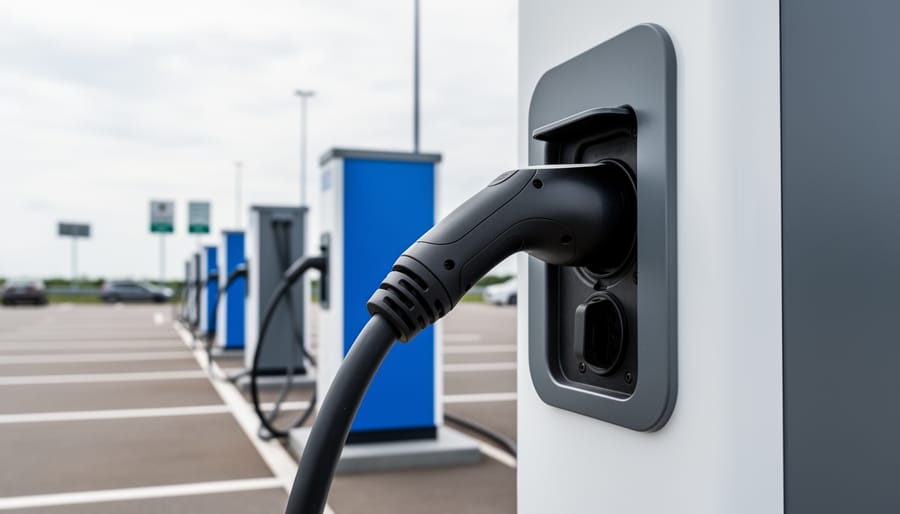
Pilot Travel Centers, General Motors and EVgo have opened the first 17 locations of their national EV charging network, moving a previously announced plan from promise to pavement. For anyone tracking how the industry will actually build EV charging at scale, that matters. Announcements are easy. Working stations that drivers can plug into are the real test.
The details beyond that opening are still limited, and we won’t speculate on locations, timelines or capacity. What we can say is that the rollout is underway, and it brings fresh attention to the hardware behind every charging stall: durable cabling, reliable power delivery and a supply chain that can keep pace with demand.
At Top Solar, an ISO 9001:2015 certified manufacturer, we see this build-out through the lens of components and consistency. Charging networks live or die on quality at the cable, connector and infrastructure level. This article covers what changed, six developments worth understanding, why it matters for a cleaner transportation grid, and what to watch as the network grows.
Pilot Travel Centers, General Motors and EVgo have opened the first 17 locations of their previously announced national EV charging network. The headline is simple: a plan that was once only an announcement now has real sites in operation.
It helps to read this correctly. Those 17 locations are the initial phase of a larger national network, not the finished build-out. Opening them is the first concrete proof point, and it separates the collaboration’s stated ambitions from charging infrastructure that drivers and fleets can actually use.
A note on scope. This article does not cover specific site locations, project timelines or operational details such as pricing, charger counts or power levels, because none of those details were verified for this update. Guessing at them would not serve readers who are planning around real infrastructure decisions.
For accurate and current information, turn to the official announcements from Pilot Travel Centers, General Motors and EVgo. Those sources are the right place to confirm where the sites are, how they operate and what comes next. What this section can state with confidence is the milestone itself: the first 17 locations have opened, and the broader network is still ahead.
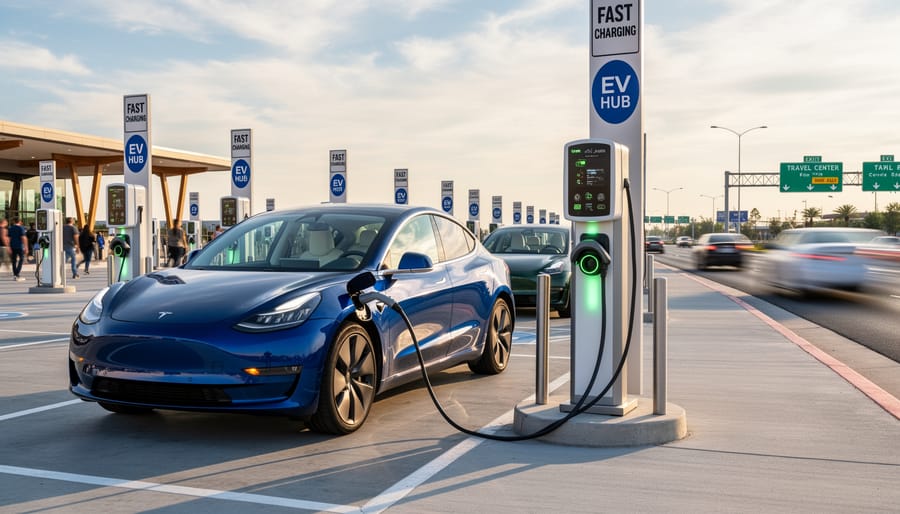
A partnership between an automaker, a charging operator and a travel center chain is easy to announce and hard to deliver. What stands out here is that Pilot Travel Centers, General Motors and EVgo have moved from a previously announced plan to open sites, with the first 17 locations of their national network now operating.
Each party brings something the others lack. GM represents the vehicle side and the drivers who need places to charge. EVgo operates charging networks. Pilot controls travel center sites that already serve people on the road. When those roles combine, no single company has to carry every piece of the buildout alone.
For suppliers, this shared model changes how demand shows up. Orders tend to follow a coordinated rollout rather than scattered, one-off installs, which makes it more predictable for manufacturers and distributors of cables, connectors and electrical components to plan production and inventory. It also raises the bar on consistency. When several organizations depend on the same network, quality, compliance and on-time delivery matter more, because a single weak link can slow every site that relies on it.
Travel centers make sense as charging hubs for a few practical reasons. They already sit close to major highways, so drivers can reach them without a long detour. They also tend to have robust electrical service and the amenities travelers look for during a stop, such as food, restrooms, and a place to rest. That matters because charging takes longer than refueling, and a site that makes the wait useful is easier for drivers to accept.
Long-distance travel is where these locations earn their value. Drivers on extended routes need predictable places to recharge, and a familiar, established stop reduces uncertainty. The opening of the first 17 locations of the Pilot, GM and EVgo network shows how this idea is moving from concept to reality.
For shipping and logistics professionals, corridor charging is part of a bigger picture. Reliable charging along freight and travel routes supports the broader electrification of transportation, from passenger vehicles to fleets that depend on dependable stops. As these networks grow, they also create steady demand for the cables, connectors, and electrical components that keep sites running safely and sustainably.
Large charging networks are rarely switched on all at once. Operators usually build in phases, and the first group of sites does a lot of the learning. The 17 locations that Pilot Travel Centers, General Motors and EVgo have opened are described as the first locations of a previously announced national network, not the finished footprint. That framing matters, because nothing public here confirms a final total or a rollout schedule, and it would be a mistake to assume one.
An initial set of sites gives operators room to validate the fundamentals: how equipment performs in real conditions, how smoothly installation and commissioning go, and how drivers actually use the chargers. Those lessons then shape the sites that follow.
For procurement teams, phased deployment changes how you plan. Demand tends to arrive in waves rather than a single large order, which rewards suppliers who can deliver consistent quality from one batch to the next. It also makes standardized cables, connectors and wire management more valuable, since repeatable specifications reduce errors as a network grows. Flexible ordering, dependable lead times and certified quality processes help keep each new phase on track without forcing buyers to guess at timelines no one has announced.
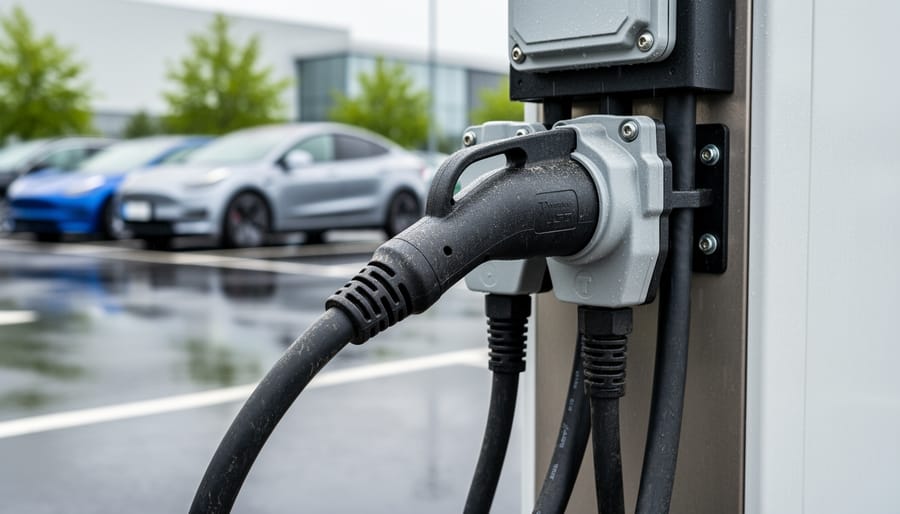
A charging station is only as dependable as the parts behind the screen. Cables, connectors, enclosures and electrical components carry high current for hours at a time, often outdoors, so weak links show up fast as downtime or safety risk. When the first 17 locations of the Pilot, GM and EVgo network came online, each depended on this same hardware working day after day.
Good power cable management protects that hardware. Properly routed and secured cabling resists abrasion, heat, moisture and tension, which keeps connections stable and reduces the chance of faults. It also makes inspection and repair faster, which matters when a site is expected to stay available.
Procurement teams can use a simple checklist when evaluating suppliers:
Quality systems tie it all together. Top Solar’s engineering support and ISO 9001:2015-certified processes show what consistent, documented manufacturing looks like in practice. Buyers who ask for that level of rigor tend to get fewer surprises in the field and stations that stay online longer.
Opening charging sites is only half the job. Getting them built depends on whether the right components arrive in the right sequence. Cables, connectors, wire management, enclosures and electrical hardware all have to be on hand before installation crews can finish a site. When even one item runs late, the whole location waits.
For procurement managers, that makes lead times and delivery coordination part of the deployment plan from day one. Phased rollouts, like the first 17 locations opened by Pilot, GM and EVgo, add another layer: each phase needs components staged for the right place at the right time.
A trusted supply chain reduces that risk by pairing consistent quality with predictable delivery. Top Solar supports EV infrastructure projects with supply chain logistics alongside cable management and component engineering, helping teams keep materials moving as networks grow.
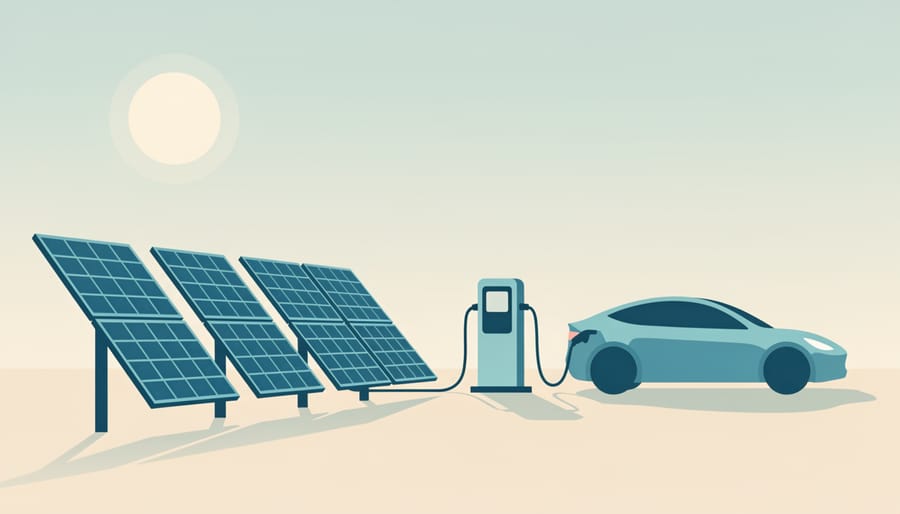
A charger is only as clean as the electricity behind it. When an EV draws power from solar or wind generation, the emissions benefit of driving electric grows, because the energy source itself produces little to no emissions during operation. When it draws from a carbon-heavy grid, the gain is smaller. That’s why charging networks like the newly opened first 17 locations from Pilot, GM and EVgo sit within a bigger conversation about where the power comes from.
Infrastructure choices matter here. Pairing charging sites with on-site solar, sourcing renewable supply, or planning grid interconnection with clean generation in mind all help move transportation toward lower emissions. These decisions are easier to make at the design stage than to retrofit later.
This is where an integrated approach pays off. At Top Solar, our work spans solar, wind and EV infrastructure, supported by ISO 9001:2015-certified quality processes. We see the connection daily: dependable cables, components and supply chain support help clean generation and charging equipment work together as one system. Sustainable mobility depends on both halves, the vehicles and the clean power that fuels them.
When Pilot Travel Centers, General Motors and EVgo opened the first 17 locations of their national network, a plan became working infrastructure. That shift matters to energy and logistics professionals because open sites turn forecasts into real demand. Chargers in service need cables, connectors, power electronics and ongoing maintenance, and operators building a larger network will keep sourcing them.
For freight and fleet planners, visible progress along the charging network helps make electrified vehicles easier to plan around. It doesn’t answer every routing or range question, but it gives planners a concrete reference point as the network grows beyond its first phase. Procurement teams, meanwhile, can read the rollout as a signal to line up components and delivery schedules early, since a phased expansion rewards suppliers who can keep pace.
The sustainability case also deepens as charging scales. Cleaner transportation depends on cleaner power, and pairing chargers with solar or wind generation, supported by battery storage where appropriate, can help reduce the emissions tied to each charge. That is why charging deployment, renewable generation and reliable components belong in the same planning conversation.
Now that the first 17 locations are open, the useful question is what comes next. Here are the signals worth tracking, framed as things to look for rather than predictions.
First, watch for further site openings announced directly by Pilot Travel Centers, General Motors and EVgo. Their official channels are the reliable source for details on new locations and timing.
Second, look at how the network grows beyond its initial phase. Expansion pace and coverage will show how the partners move from an early rollout toward a broader national footprint.
Third, consider what growth means for equipment demand. More sites typically call for more cables, connectors, wire management and electrical components, which makes quality and dependable supply increasingly important for procurement teams.
Finally, pay attention to grid planning. As charging capacity scales, utilities and project developers will need to coordinate power availability, and pairing chargers with renewable generation can strengthen the sustainability case.
Pilot Travel Centers, General Motors and EVgo are the three partners. They previously announced a national EV charging network and have now opened its first 17 locations.
Seventeen locations are open, and they are the first phase of the larger network. This article does not cover totals beyond that figure.
Dependable cables, connectors, wire management and electrical components are essential. Quality-controlled manufacturing, such as ISO 9001:2015-certified processes, helps support uptime and safety.
Exact site locations and pricing were not verified for this article, so we won’t speculate. The operators’ official announcements are the best source for both.
Procurement teams planning their own charging projects can use these answers as a starting checklist. Confirm component specifications early, plan for phased delivery, and work with suppliers who document their quality processes.
The opening of the first 17 locations in the Pilot, GM and EVgo network is a concrete step in EV infrastructure expansion, moving the conversation from announcement to open sites. Progress like this depends on what sits behind each charger: dependable cables, connectors and electrical components, backed by quality processes such as ISO 9001:2015 certification. It also depends on clean power, because the full environmental promise of electric transportation grows when renewable generation supplies the energy.
At Top Solar, we support this work across solar, wind and EV infrastructure, with cable management, engineering expertise and supply chain logistics built for demanding projects. If you are planning a charging deployment or sourcing components, connect with our team. Together, we can build the reliable, sustainable foundation that electrified transportation needs.