
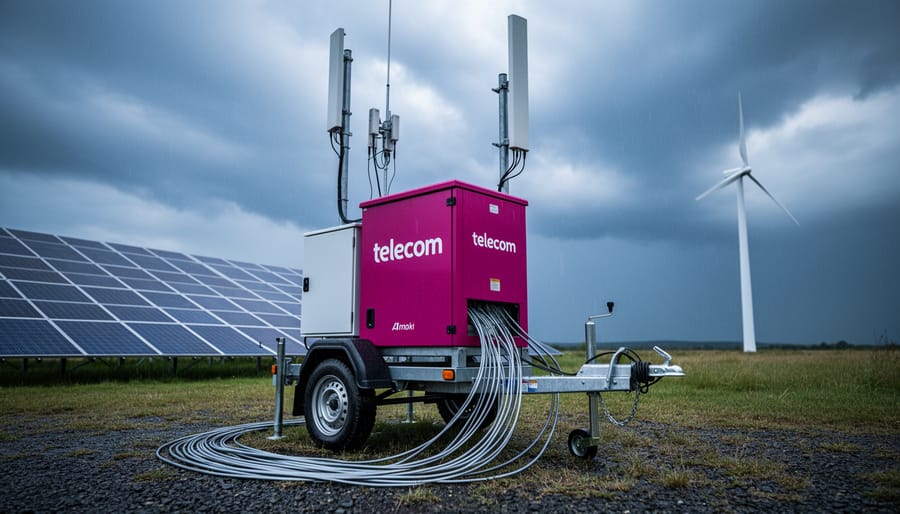
T-Mobile’s Emergency Response Team (ERT) delivers rapid-deployment cellular infrastructure directly to crisis zones, providing temporary network coverage when conventional telecommunications fail. For renewable energy operators managing distributed solar farms, wind installations, and battery storage facilities across remote territories, this service maintains field communication, remote monitoring connections, and supply chain coordination during natural disasters, grid failures, and extreme weather events that routinely threaten both conventional and renewable energy examples of infrastructure.
The ERT operates mobile cell sites mounted on trailers, trucks, and portable towers that restore voice, data, and IoT connectivity within hours of deployment. This capability directly addresses a critical vulnerability in renewable energy operations: most solar installations and wind farms depend on cellular networks for SCADA systems, inverter monitoring, security systems, and coordination between field technicians and central operations. When regional cell towers lose power or suffer physical damage, operators lose visibility into asset performance and cannot dispatch repair crews effectively.
For procurement managers and operations directors in the renewable energy sector, understanding ERT capabilities means preparing communication continuity plans that align with ISO 9001:2015 quality management standards. The service proves particularly valuable for companies managing assets across hurricane corridors, wildfire zones, and regions prone to ice storms, where communication infrastructure faces regular seasonal threats. This introduction examines how T-Mobile’s emergency response capabilities integrate with renewable energy operations, what preparation steps maximize service effectiveness, and why communication resilience deserves equal priority alongside equipment redundancy in sustainability-focused energy infrastructure.
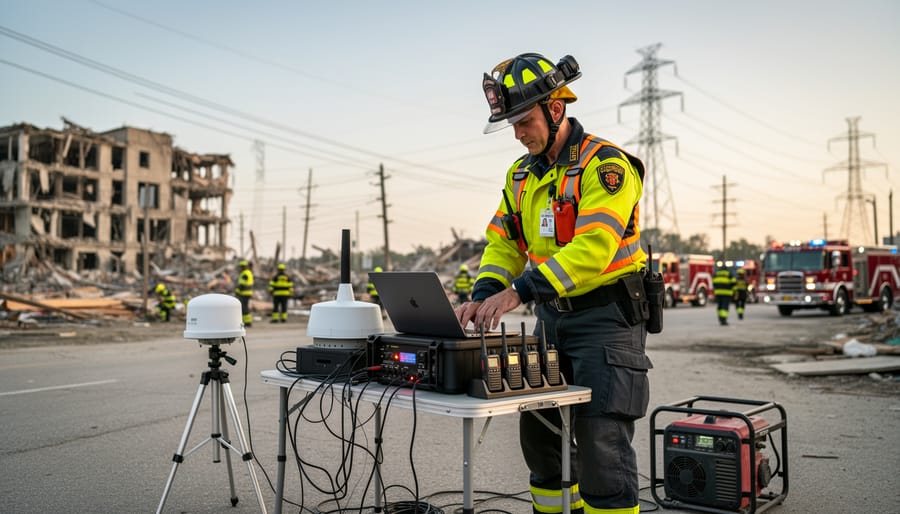
T-Mobile maintains a dedicated fleet of emergency response infrastructure designed to restore network connectivity within hours of a disaster. The core of this capability centers on Satellite Cell on Light Trucks (SatCOLTs), mobile cellular base stations mounted on heavy-duty vehicles that can be deployed to areas where commercial power and traditional network infrastructure have failed. These self-contained units provide full cellular coverage using satellite backhaul, operating independently of the local grid and damaged fiber networks.
Each SatCOLT carries its own generator, fuel supply, and satellite uplink equipment, enabling rapid deployment to disaster zones without requiring existing infrastructure. T-Mobile’s fleet also includes portable network equipment, compact cell sites that technicians can set up in under an hour, and battery-powered small cells for quick coverage patches in specific locations. These SatCOLTs deployable assets integrate with existing network architecture to extend coverage across affected regions, supporting both consumer and commercial users during critical incidents.
The emergency response teams trained to operate this equipment include network engineers, field technicians, and logistics coordinators who work in 24-hour rotations during active incidents. These teams coordinate with federal, state, and local emergency management agencies to prioritize deployment locations based on critical infrastructure needs, hospitals, emergency operations centers, utility repair sites, and key commercial facilities.
During hurricanes, wildfires, and major grid events, T-Mobile’s response protocol activates before storms make landfall or fires spread. Teams pre-position equipment in staging areas near projected impact zones, reducing deployment time from days to hours. For energy sector operations, solar farms in hurricane corridors, wind installations in tornado-prone regions, or distributed EV charging networks, this rapid restoration capability means field teams regain communications access while commercial power remains offline, enabling damage assessment, safety coordination, and repair logistics before grid restoration begins.
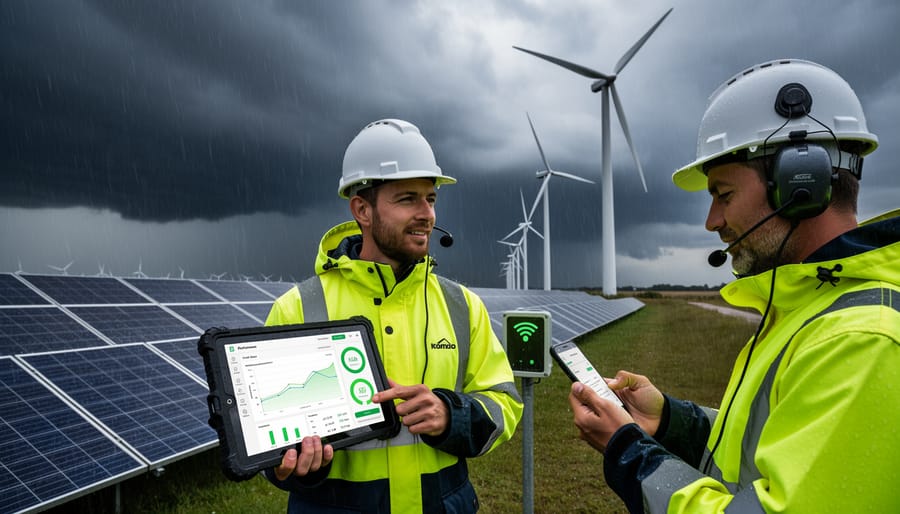
During infrastructure emergencies at renewable energy sites, real-time communication determines whether field teams can respond safely and effectively. When storm damage disables a solar farm’s grid connection or equipment failures halt wind turbine operations, technicians need immediate coordination with control centers, safety officers, and logistics support to assess conditions, deploy replacement components, and restore generation capacity.
Emergency communications networks enable distributed teams to share live site conditions, coordinate access routes around damaged infrastructure, and maintain ISO 9001:2015-compliant incident documentation as repairs progress. For multi-site operators managing solar installations across regions affected by severe weather, reliable connectivity ensures supervisors can prioritize responses, redirect crews to critical failures, and track technician safety in real time.
EV charging network operators face similar coordination challenges during regional outages. Field engineers troubleshooting individual stations require constant communication with network operations centers to verify grid status, coordinate utility restoration timelines, and manage customer communications about service interruptions.
The difference between hours and days of downtime often hinges on whether repair teams can communicate equipment specifications to procurement, confirm parts availability with suppliers, and coordinate delivery logistics without delay. When primary networks fail, backup communications infrastructure becomes the operational backbone connecting field response to organizational resources.
During a regional emergency, renewable energy projects don’t pause, but supply chains can fragment quickly. When hurricanes disrupt Gulf Coast shipping lanes or wildfires close interstate corridors, the ability to communicate becomes the difference between minor delays and project-stopping shortages. Cable suppliers need real-time updates to reroute shipments around damaged infrastructure. Component manufacturers must coordinate expedited deliveries to sites already behind schedule. Logistics providers tracking hundreds of specialized solar modules or wind turbine components across multiple carriers require constant connectivity to adjust routes, redirect drivers, and confirm delivery windows.
Without reliable communications, a three-day storm can cascade into weeks of confusion. Procurement managers lose visibility into transit status. Warehouse teams can’t confirm inventory levels or allocate scarce materials to the highest-priority installations. Field crews arrive at remote solar sites only to discover essential equipment is still sitting on a closed highway 200 miles away. This operational blindness violates the coordination principles that underpin supply chain continuity and forces reactive scrambling instead of strategic response.
T-Mobile’s emergency response infrastructure restores the communications layer that supply chain partners depend on: carrier coordination, inventory management systems, GPS tracking platforms, and direct contact with drivers navigating disrupted regions. For energy companies maintaining ISO 9001:2015-compliant documentation and delivery commitments, this connectivity enables transparent incident reporting, accurate delay tracking, and proactive stakeholder communication rather than discovering problems only after they compound into project failures.
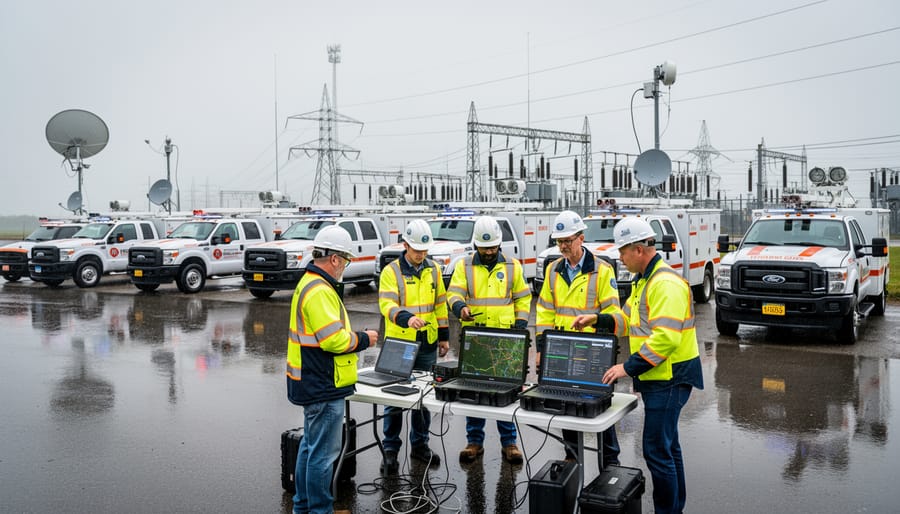
Renewable energy operators integrate T-Mobile’s emergency response capabilities into three critical operational areas: infrastructure resilience planning, incident command coordination, and distributed asset management. When severe weather threatens solar installations or grid events disrupt wind farms, operators rely on rapid-deployment communications to maintain visibility and control across their portfolios.
During Hurricane-related outages in the Southeast, solar farm operators used portable satellite links to coordinate repair crews across multiple sites simultaneously. Field technicians transmitted real-time damage assessments, equipment status updates, and safety reports while the regional grid remained offline. This maintained ISO 9001:2015-compliant incident documentation and accelerated restoration timelines by days rather than weeks.
Large-scale wind operators deploy emergency communications as part of their incident command systems. When a transformer failure or transmission line damage occurs, site managers establish dedicated communication channels that connect field teams, engineering support, utility coordinators, and executive leadership. This integrated approach ensures that safety protocols remain enforced, regulatory reporting continues uninterrupted, and strategic decisions reach the right personnel immediately.
Cable suppliers and component manufacturers leverage emergency response services to maintain supply chain visibility during regional disruptions. When wildfires closed transportation corridors in California, solar equipment suppliers used backup communications to reroute critical shipments, notify installation contractors of delays, and preserve project schedules. Remote monitoring systems stayed operational through satellite-backed connections, allowing operators to track inverter performance, battery storage levels, and grid integration status even when terrestrial networks failed.
EV charging network operators apply similar strategies. During winter storms that disabled cellular towers, charging station operators maintained transaction processing, usage monitoring, and customer support through emergency communication links, preventing revenue loss and preserving service quality commitments.
Building communications resilience requires systematic planning before an emergency strikes. Renewable energy operations face unique vulnerabilities: distributed assets across wide geographic areas, remote monitoring dependencies, and field teams working in locations where network coverage may already be marginal. When storms, wildfires, or grid failures disrupt standard telecommunications, your incident response effectiveness depends entirely on how well you prepared.
Start by mapping your current communications architecture against realistic failure scenarios. Which sites lose connectivity first during severe weather? Where do your field technicians operate beyond primary network coverage? What happens to your SCADA systems, remote diagnostics, and supply chain coordination when regional cell towers go offline? Honest assessment reveals gaps that emergency protocols must address.
A structured preparation approach ensures nothing critical gets overlooked:
Your business continuity plan should specify exactly which communications capabilities matter most during different emergency types. A localized equipment failure demands different response than a regional disaster affecting multiple sites and supply routes. Priority-rank your communications needs: safety reporting sits at the top, followed by coordination of repair crews, then supply chain visibility, and finally administrative functions.
Sustainability considerations extend to emergency preparedness. Diesel-powered backup communications equipment contradicts environmental commitments; explore solar-powered alternatives or hybrid systems that reduce carbon impact during extended deployments. Your emergency response approach should reinforce rather than undermine your sustainability mission.
Procurement managers should negotiate service agreements that include emergency response provisions, clarifying costs, deployment triggers, and performance expectations. Waiting until crisis hits to sort out commercial terms wastes precious response time and often results in unfavorable arrangements made under pressure.
Energy sector professionals frequently need clarity on how emergency communications infrastructure integrates with their operations, especially when planning for crisis scenarios that could impact distributed solar installations, wind farms, or supply chain networks serving clean energy markets.
Mobile cell sites and portable network equipment typically deploy within hours of a request during declared emergencies, with response times varying based on incident severity, geographic accessibility, and coordination with local emergency management agencies. Preestablished relationships with telecommunications providers can expedite deployment to critical energy infrastructure.
Emergency response assets primarily support public safety and government agencies during disasters, but private energy operators can coordinate through emergency management channels when their infrastructure is critical to public welfare or regional grid stability. Direct commercial arrangements may be available for large-scale energy facilities with documented critical infrastructure status.
Satellite communications, two-way radios, and private microwave links provide redundancy when terrestrial cellular networks are damaged. Many energy operators maintain layered communications strategies that combine multiple technologies to ensure field teams remain connected during severe weather events or prolonged outages.
Most modern SCADA systems accept multiple communications pathways, allowing operators to route data through emergency cellular networks, satellite links, or temporary network infrastructure without reconfiguring core monitoring software. Testing these alternate pathways before emergencies ensures seamless failover when primary connections are disrupted.
Documentation requirements for ISO 9001:2015 compliance include maintaining records of emergency communications protocols, testing schedules, vendor coordination agreements, and incident response logs. These records demonstrate your quality management commitment to operational continuity and help identify improvement opportunities in your communications resilience strategy.
Communications resilience isn’t optional for renewable energy operations, it’s fundamental infrastructure that protects both people and assets when crises strike. The overlap between emergency response capabilities and sustainability commitments runs deeper than most energy professionals realize: reliable communications enable faster incident response, reduce equipment downtime, minimize environmental impact from prolonged outages, and maintain the safety protocols that define responsible operations.
Proactive planning separates resilient energy operations from vulnerable ones. Start by mapping your current communications dependencies across distributed sites, identifying single points of failure, and quantifying the operational impact of a 24-hour or 72-hour communications blackout. This assessment reveals gaps that affect everything from technician safety to ISO 9001:2015-compliant incident documentation.
Establishing relationships with telecommunications partners before emergencies occur creates response options when regional infrastructure fails. Energy companies that integrate communications backup into their business continuity plans, treating connectivity as critical as electrical redundancy, maintain operational control when competitors go dark.
Your communications infrastructure directly affects your ability to deliver on sustainability promises and quality commitments during the moments that matter most. Assess your vulnerabilities now, before the next storm or grid event forces reactive decisions under pressure.